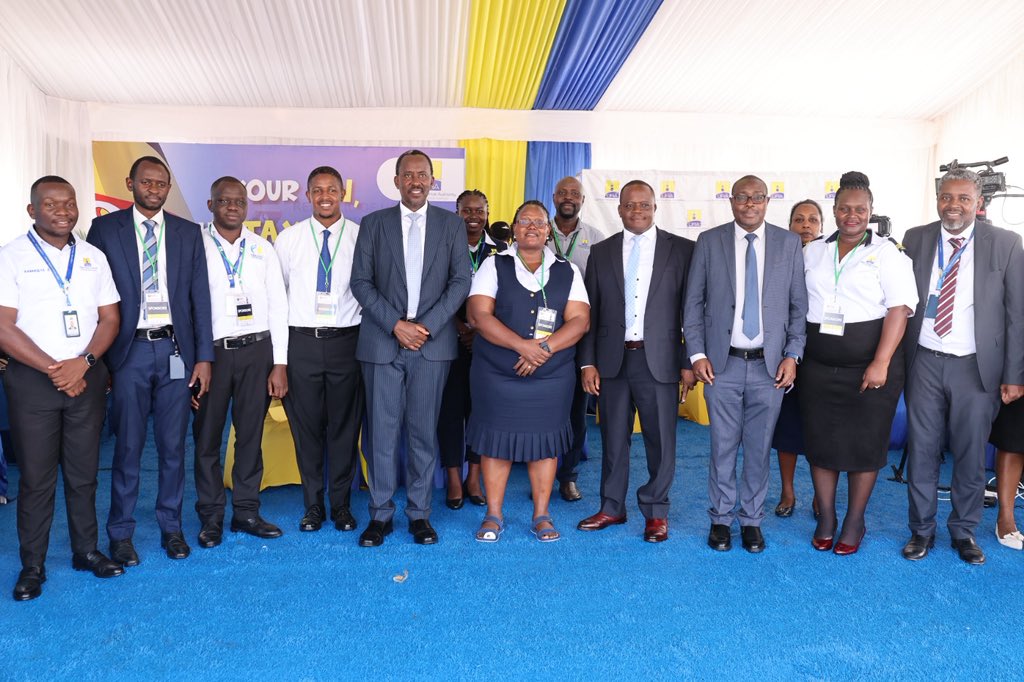
Uganda Revenue Authority (URA) Commissioner General John R. Musinguzi has called for stronger cooperation between Government institutions, Parliament and taxpayers as Uganda moves to modernise its tax system and increase domestic revenue collections. Musinguzi made the call as URA advanced the transition from Tax Identification Numbers (TINs) to National Identification Numbers (NINs), describing better identification and use of data as key to improving revenue administration.
Musinguzi said the TIN-to-NIN transition, being implemented in partnership with the National Identification and Registration Authority (NIRA) and other stakeholders, is intended to create a more reliable system for identifying individual taxpayers. He said linking tax records to the national identification system will help address gaps in taxpayer information and give URA a stronger basis for understanding economic activity across the country.
He said Uganda’s economy is changing, creating new challenges for tax administration. The growth of informal businesses, online trade, digital platforms, mobile payments, cross-border transactions and offshore income has created areas where economic activity can be difficult to track. Musinguzi said URA is therefore working towards sector formalisation, better information sharing and risk-based enforcement to ensure that eligible economic activity contributes to national development.
The Commissioner General also highlighted the role of technology in expanding revenue collections. He said systems such as the Electronic Fiscal Receipting and Invoicing Solution (EFRIS) allow URA to obtain more reliable transaction records and improve visibility of business activity. He said the authority is also strengthening customs controls and using data and intelligence to identify compliance risks while making it easier for taxpayers to meet their obligations.
Finance Minister Henry Musasizi said Uganda’s development plans cannot depend indefinitely on borrowing and support from development partners. He said the country must increasingly mobilise its own resources to finance infrastructure, energy, education, healthcare, industrial development and other services needed to transform the economy. Musasizi linked stronger domestic revenue mobilisation to the Government’s ambition of growing Uganda into a USD 500 billion economy over the next 15 years.
Musasizi said Government must also address the gap between the revenue Uganda can collect and what it actually receives. He pointed to non-compliance, under-declaration, smuggling, undervaluation and other revenue leakages as areas requiring attention. At the same time, he called for a balanced approach that supports small businesses to formalise through registration, taxpayer education, simplified compliance and technology, rather than relying only on enforcement.
The Minister asked Parliament to support efforts to protect the tax base, broaden participation in the tax system, strengthen digitalisation and improve information sharing among Government institutions. He also stressed that revenue mobilisation must be matched by accountability, saying citizens cannot continually be asked to contribute more without confidence that the money collected is being properly used. Parliament, URA and Government institutions, he said, each have responsibilities in building a sustainable revenue system.
The engagement ended with a call for continued partnership between URA and Parliament, with Budget Committee Chairperson Amos Kankunda thanking the Minister and URA leadership for bringing legislators into the discussion. Musinguzi warned that without strategic interventions, Uganda could fall short of the 20 percent tax-to-GDP target set for the financial year 2029/30. The TIN-to-NIN transition is consequently emerging as one part of a wider URA strategy to use identification, technology and data to expand the tax base, improve compliance and strengthen Uganda’s capacity to finance its own development.