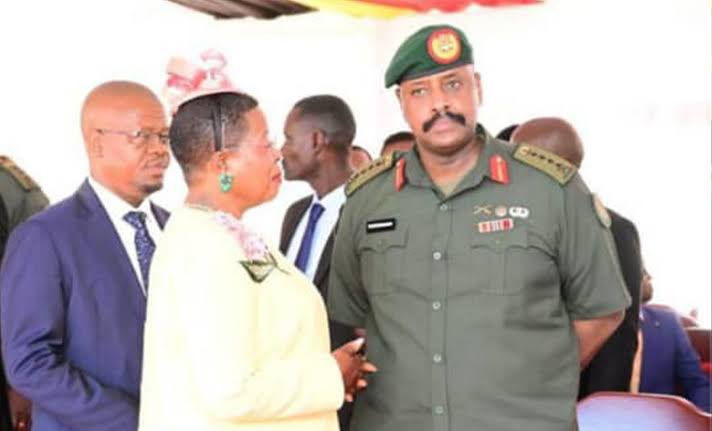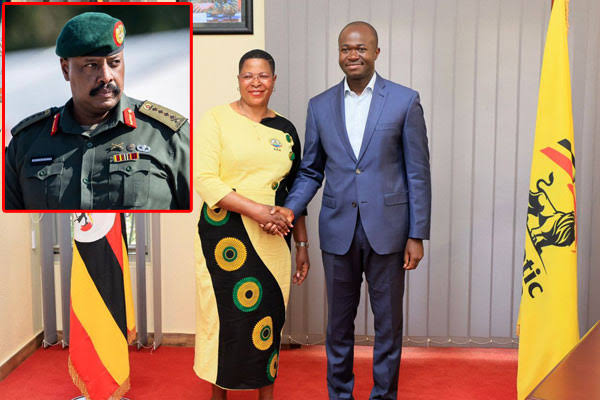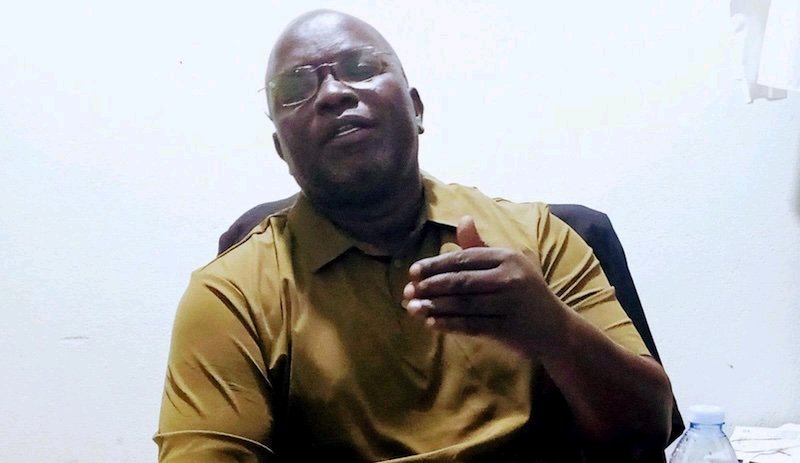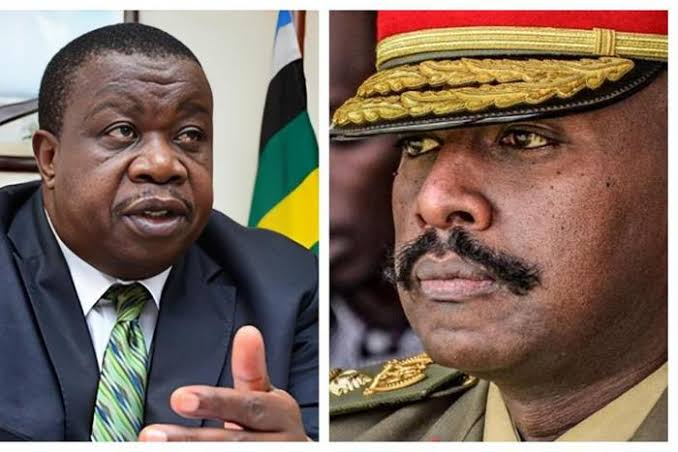
Veteran Ugandan minister Gen Kahinda Otafiire reportedly made Chief of Defence Forces Gen Muhoozi Kainerugaba and his uncle, Gen Salim Saleh, wait for about one hour and 30 minutes before finally addressing them at a meeting organised to settle their differences. The surprising account was shared by political commentator Andrew Mwenda, who said he accompanied Muhoozi to the meeting in Kapeeka. What followed was reportedly an unexpected opening in which Otafiire turned attention to his age, political journey and long history in Uganda’s political struggles.
The meeting was reportedly arranged after President Yoweri Museveni became concerned about the public disagreement between Otafiire and Muhoozi. The two influential figures had exchanged strong words, creating a situation that called for intervention. Museveni reportedly wanted them to settle their differences privately rather than continue criticising each other in public. To help bring the situation under control, he reportedly asked Gen Salim Saleh, whose real name is Caleb Akandwanaho, to chair the meeting and guide the discussions.
According to Mwenda, however, the delegation had to wait for approximately 90 minutes before Otafiire finally began speaking. The delay became one of the most striking details of the encounter because those waiting included the serving CDF and his uncle, a senior figure in Uganda’s military and political history. Although Mwenda did not establish why Otafiire arrived late or delayed the discussions, his account portrayed an unusual start to a meeting that had been organised to ease tensions between prominent government figures.
When Otafiire eventually spoke, he reportedly did not immediately address the disagreement that had brought everyone together. Instead, he began recounting his personal history, taking the discussion back to 1974, when he travelled to Dar es Salaam, Tanzania, as a young man of about 14 years. He reportedly reminded Saleh of that period and spoke about experiences that shaped his early political journey. His opening remarks appeared to emphasise that his involvement in Uganda’s political affairs stretched back many years.
The minister reportedly made an even more striking point when he reminded those present that Muhoozi was only a few months old when he made that journey to Tanzania. The comparison highlighted the considerable age difference between the veteran politician and the army chief. Otafiire also reportedly recalled his experiences in Moshi and his participation in political mobilisation alongside President Museveni. By bringing up these historical experiences, he placed his long political journey at the centre of the conversation before the participants turned to the dispute itself.
As the discussions continued, Mwenda reportedly questioned whether Otafiire could have handled the disagreement differently by approaching Muhoozi privately. He suggested that an experienced elder could offer advice without allowing differences to develop into a public confrontation. The question touched on the importance of communication and respect among senior leaders, especially when their disagreements attract public attention and risk creating tension within the government.
In response, Otafiire reportedly said he did not have Muhoozi’s telephone number. The disagreement had reportedly escalated after the minister made remarks about a general who allegedly favoured violence. Muhoozi subsequently demanded an apology and threatened to arrest Otafiire. The veteran minister responded defiantly, declaring that he would rather die than live begging. The exchange added to public interest in the dispute, with the meeting becoming an opportunity to address the tensions between the two men.
Mwenda’s account offers a glimpse into the unusual events surrounding the Kapeeka meeting, from the reported 90-minute delay to Otafiire’s decision to begin by recalling his age and political history. However, it remains unclear from his account whether the discussions ultimately resolved the disagreement. The incident has nevertheless highlighted the challenges that can arise when influential leaders disagree publicly and the importance of finding ways to resolve such disputes through dialogue rather than confrontation.