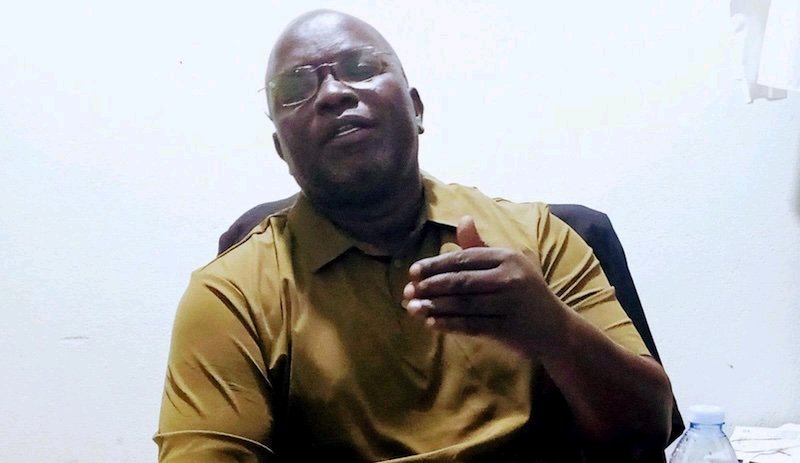
Tony Kitara, a former candidate in the Laroo-Pece Division parliamentary race, has rejected allegations that he is being used by Speaker of Parliament Anita Annet Among to fight Minister of Justice and Constitutional Affairs, Norbert Mao.
Kitara, who contested the January 15 general elections on the National Resistance Movement (NRM) ticket, has filed a petition at the High Court in Gulu, challenging the legitimacy of Mao’s victory.
Mao won the seat with 7,359 votes, defeating independent candidate Fr. Charles Onen, who secured 5,562 votes. Kitara finished in third place, with 2,867 votes.
In his petition, Kitara claims that Mao violated several provisions of the Electoral Commission’s harmonized campaign schedule. He specifically points to Mao’s campaign activities in Lawiyeadul Ward, an area he argues was restricted during the election period.
Kitara insists that Mao’s actions disrupted his own campaign and were a violation of the agreed-upon rules. Furthermore, Kitara alleges that voter bribery occurred during the elections, citing a particular instance where Shs 150,000 was allegedly given to a women’s savings group leader at Gulu Town Primary School.
Mao, in response to Kitara’s petition, suggested on social media that Kitara was being manipulated by his political enemies, including Speaker Among, whom Mao has previously expressed interest in challenging for the position. Mao’s statement on X read, “I don’t fight dogs, I fight their owners. Full stop.” This remark has sparked controversy, with Kitara accusing Mao of disrespect and dismissing the claim that his petition was politically motivated.
Kitara maintains that his legal challenge is not driven by personal animus or political ambitions. “I have nothing personal against Mao. It is purely a legal matter,” Kitara asserted. “I am not desperate to get into parliament, but I want these issues addressed in court so that the facts are officially recorded.” Kitara’s petition also raises concerns about the Electoral Commission’s neutrality, citing an incident where an Electoral Commission official was allegedly seen issuing voter identification slips at one of Mao’s rallies, which could suggest a conflict of interest.
The petition further highlights accusations that Mao campaigned beyond the legally established hours and took part in activities during the restricted period before Election Day. Kitara points to Mao’s appearances on radio talk shows as an example of these irregularities, which, according to Kitara, should be examined by the court to ensure fair electoral practices in the future.
“I am asking the court to rule on whether such actions are lawful. If they are, future candidates will have to follow the same path, but if they are unlawful, the court should nullify this election,” Kitara stated. The outcome of the petition will set a crucial precedent for how electoral rules are enforced in Uganda.
Meanwhile, Bishop Godfrey Loum of the Northern Uganda Diocese has called on defeated candidates in the Acholi sub-region to consider mediation rather than long, costly court battles. He warned that election petitions often consume valuable time and resources, deepening political divisions within communities. Kitara’s petition has drawn attention to the need for clear and fair electoral practices, with both Mao and the Electoral Commission yet to respond to the accusations in court.
As the legal process unfolds, the future of Mao’s election victory hangs in the balance. The High Court’s ruling will not only determine the fate of this particular race but also shape the approach to electoral disputes in Uganda for years to come. Kitara’s fight, though rooted in a specific election, could have far-reaching implications for how future elections are contested and governed.