As President Yoweri Kaguta Museveni prepares for his upcoming visit to Mbale City, a simmering crisis at the Mbale Central Market is drawing increasing attention. Despite being home to over 5,000 vendors, the market—a government-funded facility—is mired in accusations of corruption, exploitation, and neglect by local city council officials, who are accused of siphoning off taxpayer funds without reinvesting in the market’s upkeep.
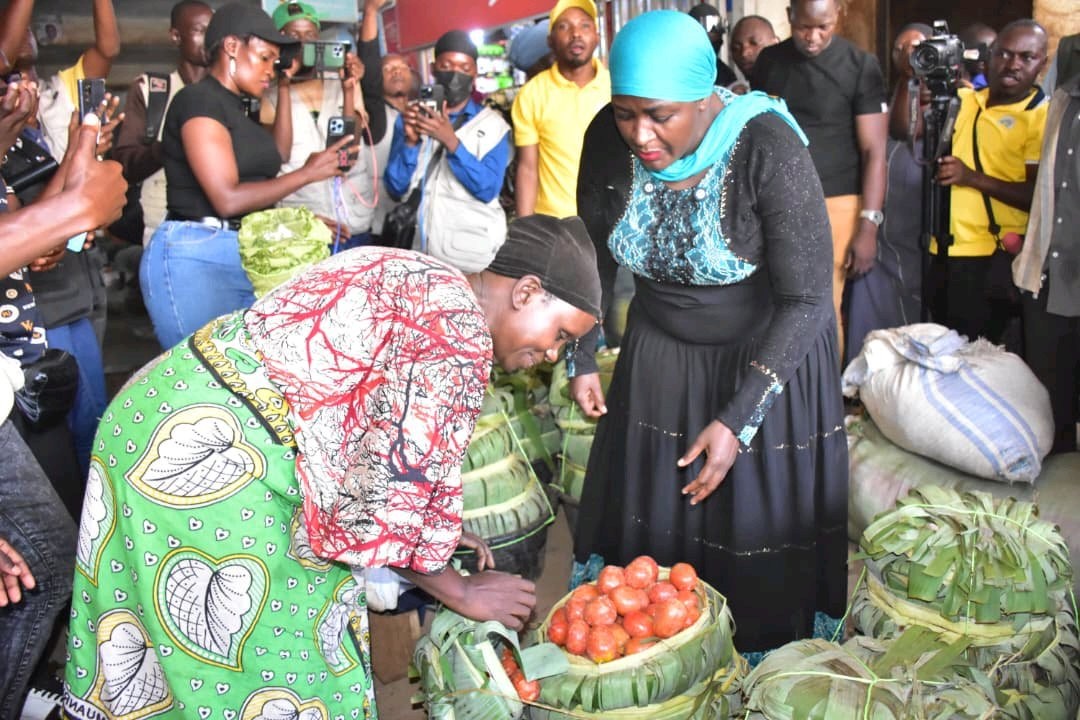
During a fact-finding visit led by Hajjat Hadijah Namyalo Uzeiye, the Manager of the Office of the National Chairman (ONC), a growing number of vendors voiced their frustration at the state of the market. The traders revealed shocking details about how local officials have allegedly embezzled tax revenues, imposed illegal fees, and neglected basic services such as water supply and waste management.
Vendors at the market, which was built to modernize trade and ease congestion in the city, claimed they are being exploited by local government officials. “We pay daily taxes, yet nothing is done. There’s no water, the toilets are unusable, and garbage piles up for weeks,” said Ismail, Chairperson of the KUNGA NRM Market Group. “It feels like the market is just a money-making scheme for the officials while we suffer.”
In addition to the basic failures in infrastructure and sanitation, the vendors accused city council staff of taking bribes and pocketing the funds collected from traders. “They come stall by stall, asking for taxes in cash without issuing receipts,” one vendor revealed. “If you refuse to pay, they threaten to throw you out or seize your goods.”
The Mbale Central Market has long struggled with poor infrastructure, but the situation appears to be deteriorating rapidly. Traders highlighted severe deficiencies, including leaking roofs, cracked walls, and unsanitary conditions that are putting their businesses and livelihoods at risk. “When it rains, water floods into our stalls. We pay for cleaning services, but no one ever comes to collect the trash,” said Mulyama Judith, one of the vendors.
Adding to their frustration, the National Water and Sewerage Corporation (NWSC) cut off the water supply months ago, citing unpaid bills—yet the traders still continue to pay water fees to the council. “We’ve been paying for water, but the taps remain dry. The council has completely ignored our plight,” said Judith.
The traders also expressed their disappointment with the government’s flagship wealth creation programs, particularly the Parish Development Model (PDM) and Emyooga. “We hear about PDM and Emyooga all the time, but none of us here have ever seen any support. All the funds go to rural areas, leaving city dwellers like us out of the equation,” Ismail said.
While these programs are intended to empower Ugandans at the grassroots level, the market vendors say they have been left behind in the government’s vision for economic transformation. The lack of inclusion has only deepened their sense of frustration with the local authorities.
In response to the vendors’ complaints, Hajjat Namyalo promised swift action, assuring them that the corrupt officials responsible would be reported directly to President Museveni. “We will not tolerate any form of corruption. If anyone is misusing public money, gather evidence and we will expose them,” Namyalo said during her visit to the market.
She also vowed to lobby for financial assistance to help empower the traders and improve the conditions at the market. “The NRM government is committed to supporting small businesses, but we must ensure that services and programs are delivered where they are needed the most,” Namyalo added.
Moreover, she urged the vendors to remain loyal to the NRM, stressing the importance of supporting President Museveni to ensure that these issues are addressed. “You have a right to demand better services, but you must also support the president and his agenda for a better Uganda,” she concluded.
Inaugurated by President Museveni in 2014 as part of the Markets and Agricultural Trade Improvement Project (MATIP), the Mbale Central Market was meant to serve as a model for modernizing trade and improving livelihoods for local vendors. Funded by the African Development Bank (AfDB) and the Government of Uganda at a cost of UGX 28 billion, the market was designed to decongest the city’s streets and provide a conducive environment for small-scale traders.
However, nearly a decade later, the market remains plagued by corruption, neglect, and mismanagement. While the vendors continue to pay taxes, they have seen little to no improvement in the market’s infrastructure or services. Instead, they are left to grapple with worsening conditions that undermine their ability to do business and provide for their families.
The situation at Mbale Central Market reflects a deeper problem of corruption and impunity in local governance. Analysts argue that the failure to address these issues may have far-reaching implications for President Museveni’s government, particularly as the 2026 elections approach.
As Mbale prepares to welcome President Museveni, the scandal at the Central Market is likely to take center stage unless immediate steps are taken to address the vendors’ grievances. The vendors are calling for greater oversight, accountability, and a reallocation of the funds they have been paying over the years.
For President Museveni, the upcoming visit to Mbale will present an opportunity to address these pressing issues directly and demonstrate his government’s commitment to tackling corruption at all levels. The vendors are hoping that the President will take decisive action to ensure that the promises made when the market was first established are finally fulfilled.
As the community awaits the President’s arrival, one thing is clear: the success of his visit will depend on his ability to restore faith in the government’s ability to deliver services, tackle corruption, and support the livelihoods of ordinary Ugandans.