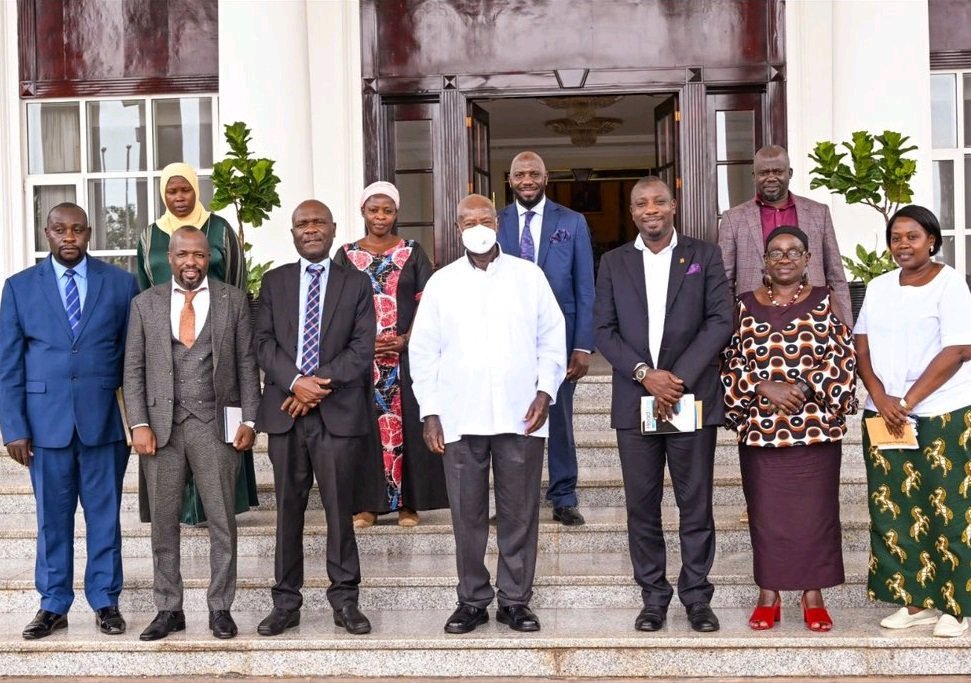
President Yoweri Museveni on Thursday held a closed-door meeting with a group of opposition Members of Parliament at State House Entebbe, signaling a rare moment of direct engagement aimed at easing political tensions following Uganda’s January 2026 general elections.The meeting brought together legislators from across the opposition spectrum and focused on national stability, reconciliation and the broader political climate after a fiercely contested election period that was marked by arrests, protests and heightened mistrust.
Leading the delegation was Mawokota South MP Yusuf Nsibambi of the Forum for Democratic Change (FDC), who said the talks were driven by the need to cool tempers and restore calm across the country. He described the engagement as a peace-oriented initiative centered on unity, development and long-term stability.One of the most sensitive issues raised was the fate of political detainees.
Nsibambi said opposition MPs pressed the President to consider clemency for hundreds of individuals they believe were detained for political reasons during and after the election period.The lawmakers also called for an independent and thorough inquiry into the incarceration of Butambala County MP Muhammad Muwanga Kivumbi, arguing that his case deserved objective scrutiny free from political influence or misinformation.
Responding to criticism from sections of the opposition over his decision to meet the President, Nsibambi defended the dialogue, saying he acted on his own conviction as an elected leader. He maintained that engaging across political divides is not betrayal, but a responsibility owed to constituents and the nation.He further stressed that meaningful dialogue, even with political rivals, remains a cornerstone for national cohesion, warning that prolonged confrontation only deepens divisions and undermines democratic progress.
Several opposition figures attended the meeting, including legislators from FDC, the Democratic Party and the People’s Front for Freedom, as well as former MPs. Although State House did not issue an official statement, participants said the engagement formed part of wider efforts by political actors, civil society and religious leaders to de-escalate tensions and foster reconciliation in the post-election period.