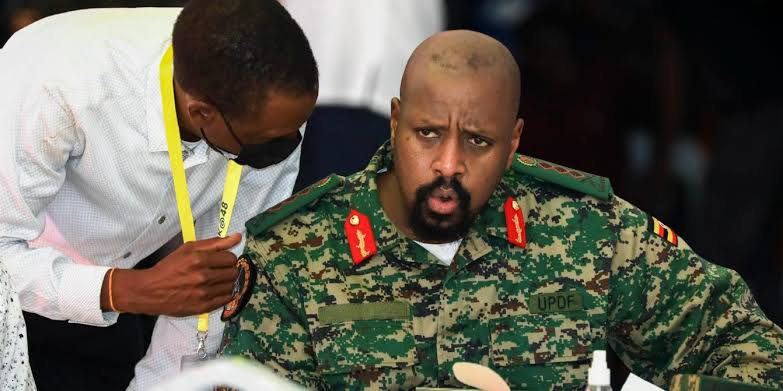
Gen. Muhoozi Kainerugaba has sparked fresh debate after sharing strong remarks on social media regarding the condition of roads in Kampala and how future expansion projects should be handled.
In the message, Muhoozi expressed dissatisfaction with the current state of road infrastructure in the capital, describing the situation as unacceptable and in need of urgent intervention.
The Chief of Defence Forces questioned whether existing road expansion efforts were sufficient to meet the growing demands of Kampala’s rapidly increasing population and traffic volume.
According to his remarks, Kampala requires a more ambitious infrastructure strategy capable of transforming the city’s transport network and reducing congestion.
Muhoozi argued that many roads within the city need significant upgrading and expansion to improve mobility for residents and businesses.
He suggested that future road projects should focus on increasing the number of lanes and improving overall traffic flow throughout the capital.

The comments come at a time when traffic congestion remains one of the most frequently discussed urban challenges facing Kampala.
Many residents spend hours navigating crowded roads, particularly during peak morning and evening periods.
Business leaders have repeatedly called for investments in transport infrastructure, arguing that traffic delays negatively affect productivity and economic growth.
In his statement, Muhoozi proposed that Uganda should finance major road expansion projects using domestic resources rather than relying heavily on external arrangements.
He expressed confidence that Ugandan institutions possess the capacity to undertake large-scale infrastructure works if provided with the necessary resources and support.
Particularly, he praised the engineering capabilities of the Uganda People’s Defence Forces, suggesting that UPDF engineers could play a major role in implementing road projects.
Over the years, UPDF engineering units have participated in various construction activities, including road rehabilitation, bridge construction, and emergency infrastructure works.
Supporters of Muhoozi’s proposal argue that greater use of local expertise could reduce costs while building national technical capacity.
They maintain that investing in domestic engineering teams could create jobs and keep more project resources within the country.
However, some observers caution that large infrastructure projects require extensive planning, procurement processes, environmental assessments, and financial oversight.
Urban development experts note that successful road expansion projects depend not only on construction capacity but also on long-term transport planning.
Several analysts have also emphasized the importance of transparency and accountability in the management of public infrastructure funds.

The comments have generated significant discussion online, with many Ugandans expressing frustration over persistent traffic congestion and deteriorating road conditions in certain parts of the city.
Others have welcomed the idea of expanding Kampala’s road network but argue that public transport improvements should accompany any road construction efforts.
Transportation specialists point out that modern cities require integrated solutions involving roads, public transit systems, pedestrian facilities, and traffic management technologies.
The debate has also revived broader discussions about infrastructure financing and how Uganda can fund major development projects sustainably.
Many citizens believe that improving Kampala’s transport network is essential for supporting economic growth and enhancing the quality of life for urban residents.
As reactions continue to pour in, Muhoozi’s remarks have once again placed infrastructure development at the center of public discourse, highlighting the growing demand for modern, efficient, and reliable transportation systems in Uganda’s capital city.