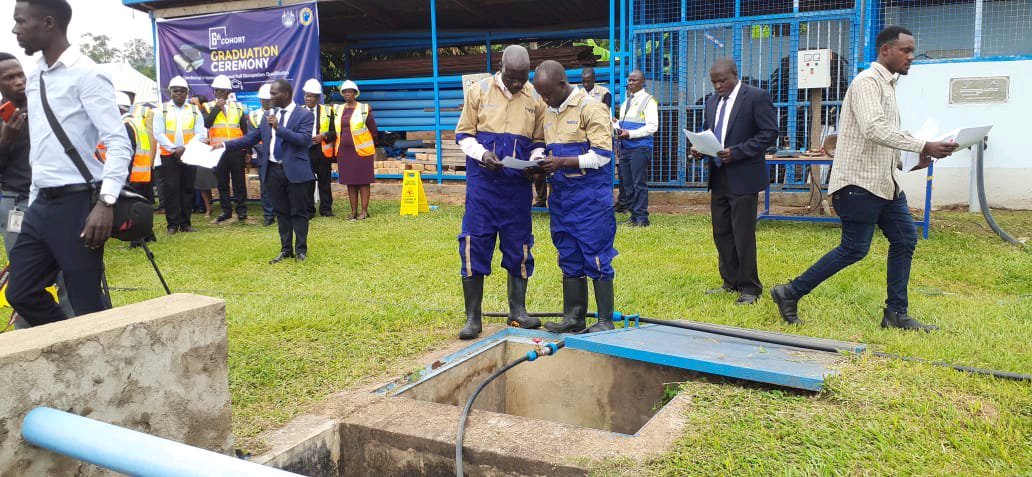
The Managing Director of National Water and Sewerage Corporation (NWSC), Dr. Silver Mugisha, has launched a new phase of innovation and improvement at the Lubigi Sewage Treatment Plant. During a recent inspection, he emphasized the need for fresh research, better infrastructure, and smarter ways to manage waste. His goal is to ensure the plant remains strong and useful for many years while also finding new economic value in what is currently treated as waste.
One of the key ideas introduced is turning the plant’s solid waste into useful byproducts. Instead of simply disposing of sludge, NWSC wants to explore ways to recycle and reuse it. This could help reduce operational costs and even create income opportunities. Already, some dried sludge is sold to farmers as fertilizer, but the new plan aims to expand and improve this process.
Dr. Mugisha also called for a detailed study comparing maturation ponds and constructed wetlands. This research is important because the natural Lubigi wetland, which the plant depends on for final discharge, is slowly shrinking. By studying alternative treatment methods, NWSC hopes to prepare for future expansion and protect the environment at the same time.
While he praised the Lubigi staff for their hard work, the Managing Director made it clear that maintenance must always be a top priority. He directed immediate improvements such as replacing old roofing and strengthening access roads with concrete. These changes will help keep the facility safe, stable, and efficient.
Located in Rubaga Division along Kampala-Hoima Road, the Lubigi Sewage Treatment Plant plays a major role in keeping the city clean. Since its commissioning in 2014, it has helped reduce pressure on the Nakivubo wetland and improved sanitation in Kampala’s northwestern areas. The plant serves busy communities like Kawempe, Bwaise, Makerere, and even Mulago National Referral Hospital.
The facility handles both piped sewage and waste delivered by vacuum trucks. It can treat up to 5,000 cubic meters of wastewater and 400 cubic meters of fecal sludge every day. Using waste stabilization ponds, including anaerobic and facultative systems, the plant relies on natural processes to clean the water before releasing it into the wetland.
However, recent reports show the plant is working close to its full capacity. This has made research into advanced treatment methods even more urgent. Improving water quality and finding better ways to manage waste are now top priorities.
The Lubigi plant is also an important part of efforts to protect Lake Victoria from pollution. By reducing untreated waste entering the lake, NWSC is helping to safeguard both the environment and public health. With these new plans, the corporation is not only solving today’s problems but also preparing for the future of Kampala’s growing population.