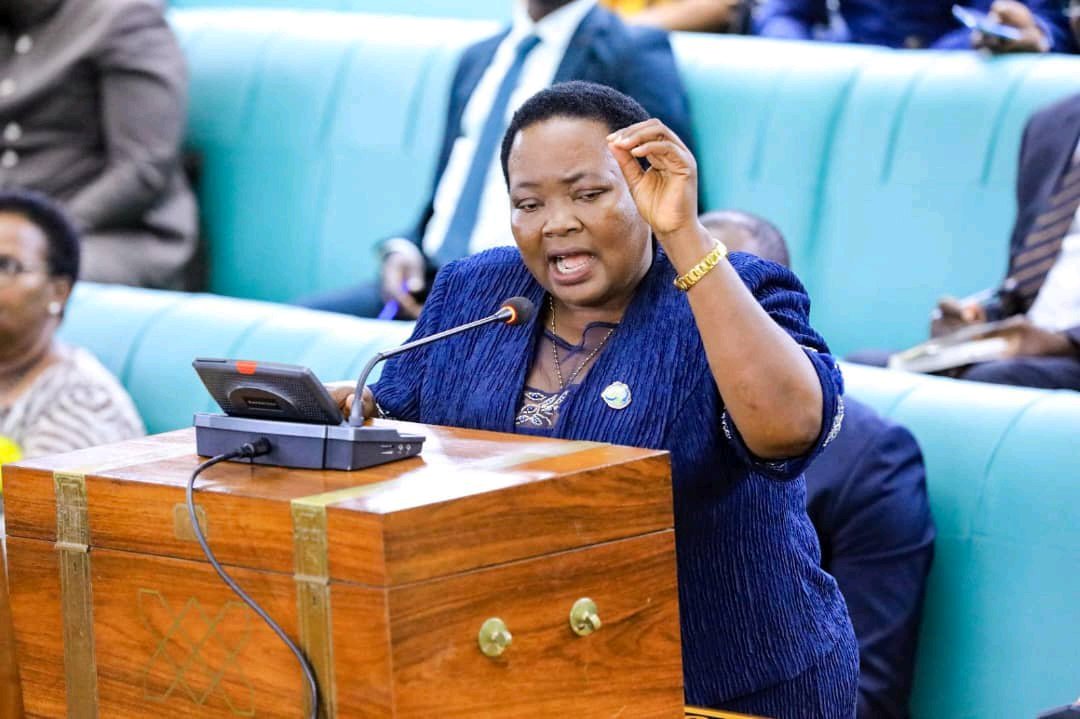
Uganda’s political landscape has once again shifted after Prime Minister Robinah Nabbanja formally presented a proposal before Parliament seeking approval to dramatically expand the size of the country’s Executive arm for the 2026–2031 government term. The move comes at a time when public concern over government expenditure and administrative efficiency continues to grow across the nation.
In the proposal tabled before lawmakers, Nabbanja requested an increase in the number of full Cabinet ministers from 21 to 30. The Prime Minister also pushed for a major rise in the number of other ministers, including ministers of state, from 21 to 51, a change that would significantly enlarge the structure of government under President Yoweri Museveni’s new administration.
The motion was introduced as Parliament reviewed the composition of the incoming Executive following the recent unveiling of the new Cabinet lineup by President Museveni. The discussions attracted strong attention both inside and outside Parliament, with many observers questioning whether the expanded Executive is necessary at a time when the country faces mounting economic challenges.
Robinah Nabbanja, who also represents Kakumiro District as Woman Member of Parliament, recently secured approval from Parliament to continue serving as Prime Minister for a second term. Her reappointment reinforced President Museveni’s confidence in her leadership as the government prepares for another five-year political cycle.
President Museveni had earlier released the official list of Cabinet appointees for the 2026–2031 term, setting in motion the constitutional process of parliamentary scrutiny and approval. The newly proposed structure is expected to create one of the largest Executive teams Uganda has seen in recent years, further intensifying public discussion over governance priorities.
Supporters of the expansion argue that the growing demands of governance require a broader leadership team capable of handling specialized sectors and accelerating service delivery across the country. They maintain that additional ministers could improve coordination, supervision, and implementation of national development programs.
However, critics have strongly challenged the proposal, warning that the enlarged Executive could place an even heavier burden on taxpayers. Opposition voices and policy analysts argue that increasing the number of ministers may fuel unnecessary public spending through salaries, allowances, vehicles, offices, and administrative costs at a time when citizens are demanding improved healthcare, education, and infrastructure.
As Parliament prepares to debate and decide on the proposal, the country remains sharply divided over the future size of government. While the administration insists the expansion is aimed at strengthening service delivery and political coordination, many Ugandans are waiting to see whether the new Executive structure will deliver meaningful results or simply deepen concerns over the cost of governance.