Veteran Ugandan politician and women’s rights advocate Miria Matembe has spoken publicly following her recent release from detention, delivering a message that has quickly sparked debate across the country. In her remarks, Matembe said she forgives President Yoweri Kaguta Museveni and his son, Muhoozi Kainerugaba, for their alleged role in the events that led to her arrest.
Speaking to supporters and members of the media shortly after regaining her freedom, Matembe said she harbored no personal hatred despite the difficult experience she had gone through. She stated that forgiveness was a principle she had embraced throughout her life and political journey.
Her remarks came in response to comments made by President Museveni during his national address on Saturday, July 4, 2026, in which he discussed issues surrounding security, political activism, and the actions of state institutions. The President’s comments generated widespread reactions from different sections of society.
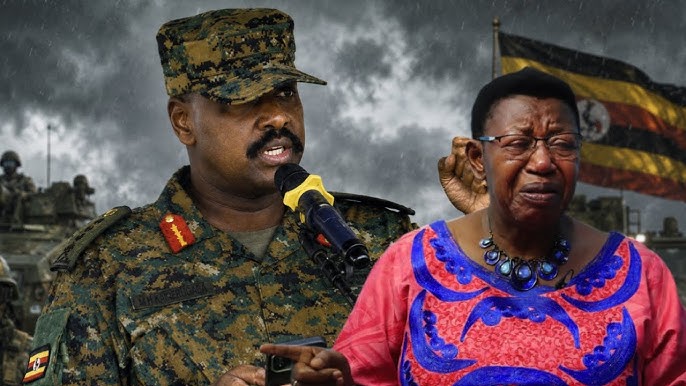
Matembe’s statement, particularly her words, “I forgive Museveni and his son for they do not know what they are doing,” immediately drew attention because many interpreted it as both a message of reconciliation and a sharp criticism of the actions taken against her.
The former minister said that while detention had been a difficult experience, it had not weakened her resolve to continue speaking out on matters she believes are important for Uganda’s future. She maintained that freedom of expression and political participation remain essential pillars of democracy.
According to Matembe, no amount of intimidation can silence citizens who believe they are standing for justice and accountability. She argued that public leaders should welcome criticism and differing opinions rather than viewing them as threats.

During her remarks, she reflected on Uganda’s political journey over the years, noting that the country has made progress in several areas but still faces challenges that require open dialogue and constructive engagement among citizens and leaders.
Matembe emphasized that forgiveness should not be mistaken for surrender. She explained that forgiving those she believes wronged her does not mean abandoning her convictions or ceasing to advocate for causes she considers important.
Supporters who gathered around her applauded the statement, describing it as a demonstration of resilience and strength. Many praised her decision to respond with words of forgiveness instead of anger despite the circumstances surrounding her arrest.
Political observers noted that Matembe has long been known for speaking her mind regardless of the political consequences. Throughout her public career, she has built a reputation as a figure willing to challenge authority when she believes principles are at stake.
The developments have reignited public discussions about the relationship between government institutions and political activists. Commentators continue to debate the balance between national security concerns and the protection of civil liberties.
Some analysts argue that incidents involving prominent political figures often attract greater public attention because they raise broader questions about governance, accountability, and the rule of law. As a result, Matembe’s comments have resonated beyond her immediate supporters.
Others believe her message may contribute to lowering political tensions by emphasizing forgiveness rather than retaliation. They point out that reconciliation has historically played an important role in resolving disputes within societies facing political disagreements.
Meanwhile, supporters of the government have defended state institutions, arguing that security agencies operate within legal frameworks and that decisions regarding arrests and investigations should be assessed based on evidence and established procedures.

The incident has also generated extensive discussion on social media platforms, where Ugandans have expressed a wide range of opinions. While some praised Matembe’s courage, others focused on the broader political issues highlighted by the episode.
Throughout the discussion, Matembe remained firm in her position that Uganda’s future depends on citizens being free to express their views without fear. She encouraged people to remain peaceful while continuing to engage in national conversations about the country’s direction.
She further urged young Ugandans to participate actively in civic affairs and to remain committed to democratic values. According to her, lasting progress can only be achieved when citizens take an active interest in shaping their country’s future.
Observers say the significance of her remarks lies not only in the criticism they contained but also in the tone she adopted. Rather than calling for confrontation, she chose language centered on forgiveness and personal conviction.
As reactions continue to emerge from political leaders, civil society groups, and ordinary citizens, Matembe’s statement is likely to remain a subject of discussion in the coming days. Many will be watching closely to see whether it influences the broader national conversation.
For now, the veteran politician appears determined to move forward while standing by her beliefs. Her message of forgiveness, delivered after a highly publicized detention, has added another chapter to Uganda’s evolving political landscape and ensured that the debate surrounding her arrest will continue long after her release.I can also make it more viral, emotional, and tabloid-style if you’re publishing it on a news website for higher readership.