Local Government Minister Balaam Barugahara Ateenyi has defended his decision not to include elite traditional government-aided schools such as Ntare School and Bweranyangi Girls Secondary School in his nationwide anti-corruption inspection campaign, saying the institutions were historically created to serve families that can afford their fees.
Speaking during a meeting with residents in Isingiro District, Balaam said schools such as Ntare, Bweranyangi, Buddo, Gayaza High and Namagunga have over the years operated as legacy institutions mainly attended by learners from financially stable families. He argued that they should not be compared with schools established under government programmes aimed at providing affordable education for ordinary Ugandans.
The minister explained that the government introduced initiatives such as Seed Schools, Universal Primary Education (UPE) and Universal Secondary Education (USE) to expand access to education for children from less privileged backgrounds. He advised parents who cannot afford the fees charged by traditional schools to consider the available government-supported alternatives.
“If you want to go to Ntare, you have to tighten your belt. If your belt is not tight enough, you should go to seed schools. Even God did not create all fingers to be equal,” Balaam said.
His remarks followed criticism from some members of the public who questioned why his “Expose the Corrupt” campaign had concentrated on ordinary government-aided schools while appearing to leave out high-fee traditional institutions that also benefit from government support.
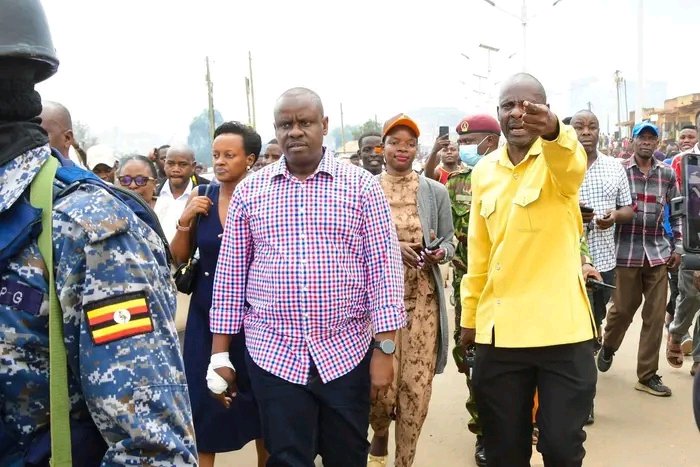
Balaam maintained that his inspections are focused on identifying corruption, misuse of public resources and violations affecting government education programmes. He said the campaign, conducted in collaboration with the State House Anti-Corruption Unit, the Criminal Investigations Directorate and local leaders, aims to protect government investments in education.
Since launching the inspections, the minister has visited several schools across the country, leading to investigations into allegations including ghost learners, inflated enrolment figures, illegal fee collections and misuse of government funds. Several school administrators have faced arrests, interdictions and further investigations.
Among the institutions affected by the crackdown are Nabumali Senior Secondary School, Naiku Primary School, Nkoma Secondary School, St John’s College Magale and Namisindwa Senior Secondary School, where authorities moved to address alleged irregularities.
Balaam’s comments have reignited debate on the balance between protecting public resources and addressing inequalities within Uganda’s education system, with discussions continuing over the role of both traditional elite schools and newer government education initiatives.