In a landmark event marking Africa Statistics Day 2025, the Uganda Bureau of Statistics (UBOS) convened a public lecture and workshop, calling for a renewed focus on innovation, investment, and collaboration across the nation’s statistical systems to drive Uganda’s development goals.
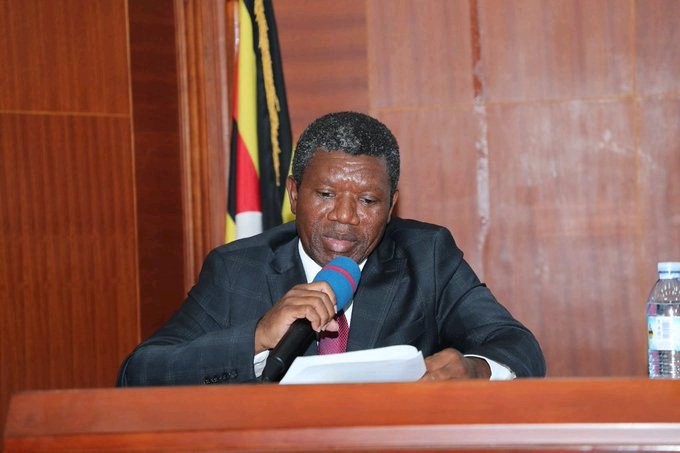
Closing the workshop at Statistics House, UBOS Board Member Dr. Rogers Matte commended participants for their engagement and stressed the pivotal role of statistics in strengthening governance and national planning.
“Statistics are at the heart of development,” Dr. Matte remarked. “The sessions today highlighted how innovative data approaches can enhance quality, improve coordination, and enable evidence-based decisions across all government sectors.”He further noted that digital transformation is more than a technological upgrade—it represents a strategic investment that enhances efficiency, accountability, and decision-making at every level of government.
Speaking on behalf of the National Planning Authority (NPA) Chairperson, Dr. Matte addressed the theme, “The Value of Statistics in Development: Advancing Data Innovation for Justice, Peace, Security, and Good Governance.” He emphasized that this year’s Africa Statistics Day theme—“Leveraging innovations in data and statistics to promote a just, peaceful, inclusive, and prosperous society for Africans”—underscores how critical data is to national progress.
“Through statistics, aspirations become measurable outcomes. They enable foresighted planning, accountable governance, and precise monitoring of progress,” he added. Dr. Matte called on the government to prioritize a robust, integrated National Statistical System, describing statistics as the backbone of Uganda’s transformation agenda.
Prisons Harness Data for Efficiency and SafetyMr. Ssempungu Apollo, Senior Superintendent of Prisons and Head of the Statistics Management Division, shared insights on how the Uganda Prisons Service (UPS) leverages administrative data to enhance management and rehabilitation efforts.He outlined the extensive use of 47 Prison Books and 135 forms across 269 prison units, 157 health facilities, a training school, and the National Prisons Referral Hospital, ensuring consistent and comprehensive data collection.
The UPS Data Transmission System connects all units, reinforcing data integrity through layered verification, validation, and automated monitoring.“These mechanisms guarantee that our operational decisions are guided by timely and accurate information,” Mr. Ssempungu explained.Judiciary Advances Through Digital IntegrationMr. Bbosa Isaac Sserunkuma, Head of the Judiciary Statistics Unit, highlighted the sector’s journey over 28 years from fragmented systems to an integrated digital platform that supports evidence-based justice delivery.
This digital evolution has enhanced transparency, operational efficiency, and accountability throughout the court system.Building Capacity, Standards, and CollaborationUBOS Executive Director Dr. Chris N. Mukiza emphasized the importance of statistical literacy and communication skills in higher education. He called for universities partnering with UBOS to include statistical communication modules to make official data more accessible and actionable.
Dr. Mukiza also stressed that all surveys and censuses intended for public use must comply with UBOS methodological and procedural standards. Additionally, ongoing initiatives aim to accredit statistical courses and train students, building a robust pool of qualified professionals.Under the Fourth Plan for National Statistical Development (PNSD IV), every Ministry, Department, and Agency is expected to maintain a functional Statistical Unit. UBOS is also partnering with cultural institutions—including Buganda, Busoga, Bugisu, Rwenzururu, and Bunyoro Kingdoms—to strengthen internal statistical systems.
Buganda Kingdom has already released its Second Statistical Abstract, “Manya essazalyo.”Dr. Matte concluded by reiterating that the strategic use of statistics and innovation is essential to Uganda’s path toward a prosperous, inclusive, and accountable society.