Uganda has been urged to strengthen its artificial intelligence (AI) foundations before putting too much focus on advanced technologies, with infrastructure, skills, data and sound policies identified as key building blocks for the country’s digital future. The message comes as AI continues to transform economies and governments around the world.
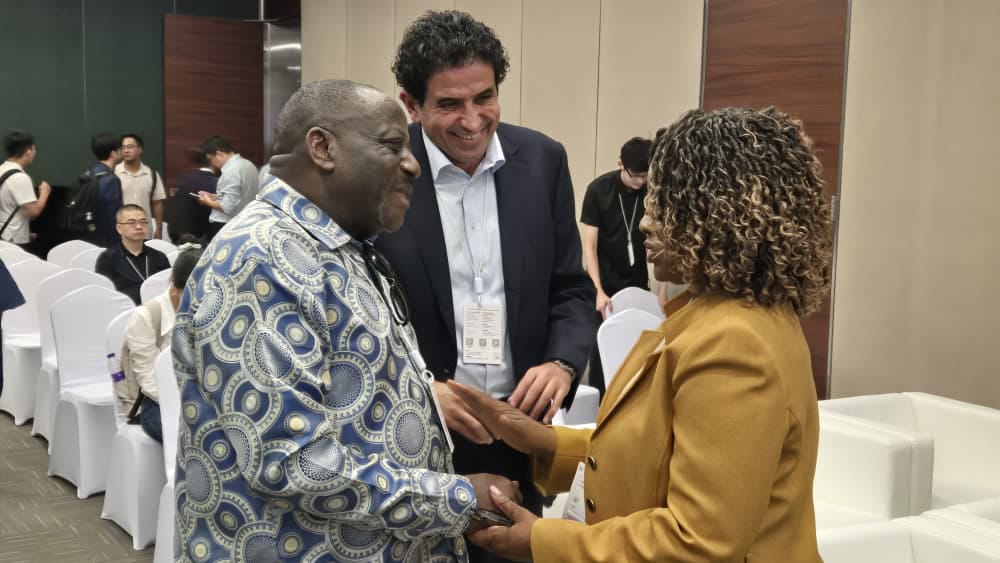
The Uganda Communications Commission (UCC) shared the reflections following the Huawei Connect 2026 event held in Shanghai, where technology experts examined how countries can prepare for an increasingly AI-driven global economy. The discussions highlighted the need for nations to develop the capacity to make meaningful technological choices rather than simply adopting systems created elsewhere.
A major focus was the concept of AI sovereignty, which was presented as having the ability to choose, participate and influence how technology is developed and used. Frost & Sullivan’s Jackie Yang explained that countries need to build AI capacity in layers, beginning with energy, computing power and data, before advancing to AI models, applications, institutions, strategies and partnerships.
The message is particularly relevant to countries seeking to expand their use of AI without creating excessive dependence on foreign systems. Advanced applications require strong foundations, and weaknesses in electricity supply, computing infrastructure, data management or technical expertise can limit the ability of a country to develop and sustain its own AI ecosystem.
The experience of Germany was also cited to demonstrate that AI development comes with challenges at every level of development. Professor Herzog, while discussing Germany’s AI strategy, pointed to skills shortages and limited AI training among businesses. It was noted that 43 percent of German companies still do not provide AI training to their employees, highlighting the importance of preparing workers as technology advances.
For Africa, the rapid evolution of AI could provide an opportunity to strengthen local capacity at a time when the global technology landscape is still taking shape. Investment in education, research, computing infrastructure, data systems and technical skills could help African countries develop solutions that respond to local priorities while increasing their participation in the international technology ecosystem.
The discussions also stressed that AI sovereignty should not be viewed simply as technological independence. The wider objective is equity, allowing countries to have the expertise and institutions required to participate in international conversations on AI governance, standards and technological development. Stronger local capacity could give African countries a greater voice in decisions that will affect the future use of AI.
For Uganda, the message from Huawei Connect 2026 is that the race into AI cannot be separated from the work of building strong foundations. By strengthening energy, computing capacity, data governance, human skills and policy frameworks, Uganda can create the conditions necessary for responsible AI adoption and greater participation in shaping the technology’s future.