The National Water and Sewerage Corporation (NWSC) is accelerating the expansion of water and sanitation infrastructure across Uganda as rapid population growth and urbanisation continue to reshape the country’s towns and cities.
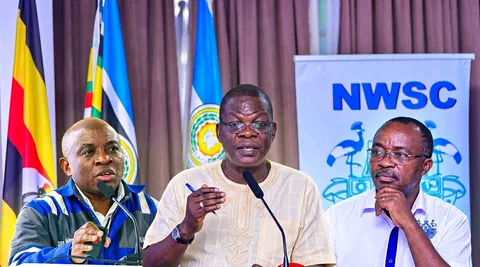
The Corporation revealed the scale of its expansion during a media round table held on Friday, August 14, 2026, at the NWSC International Resource Centre in Kampala, under the theme, “NWSC Works: Driving Social and Economic Transformation in Uganda.” The engagement brought together journalists, NWSC officials and representatives from other government agencies.
NWSC Managing Director Eng. Dr Silver Mugisha said the Corporation has undergone remarkable transformation over the past decade, with its operational footprint growing from just 23 towns to approximately 290 towns across the country.
The expansion has also been reflected in the number of people connected to the national water network. Mugisha said customer connections have increased from roughly 300,000 a decade ago to more than one million, while the Corporation’s water network has expanded dramatically from about 6,000 kilometres to more than 25,000 kilometres.
According to Mugisha, the growth demonstrates NWSC’s continued push to take reliable and safe water services closer to communities that were previously underserved, particularly in rapidly developing urban and peri-urban areas.
In the Greater Kampala Metropolitan Area, however, the challenge is becoming increasingly complex as new settlements continue to emerge faster than infrastructure can be developed. NWSC General Manager for Kampala Water, Eng. Mahmoud Lutaaya, said keeping pace with the city’s expansion remains one of the Corporation’s biggest challenges.
Lutaaya noted that Kampala’s water production capacity has increased significantly, particularly following the commissioning of the Katosi Water Treatment Plant in 2021. Katosi currently produces about 160,000 cubic metres of water per day, while Katosi and Gaba combined have a production capacity of approximately 390,000 cubic metres daily.
He stressed that water service delivery must constantly adapt to the country’s changing urban landscape, as population growth and new settlements continue to create fresh demand. “Service provision is always a moving target. We have to keep following where people are developing,” Lutaaya said, underscoring the scale of the infrastructure challenge facing Uganda’s national water utility.