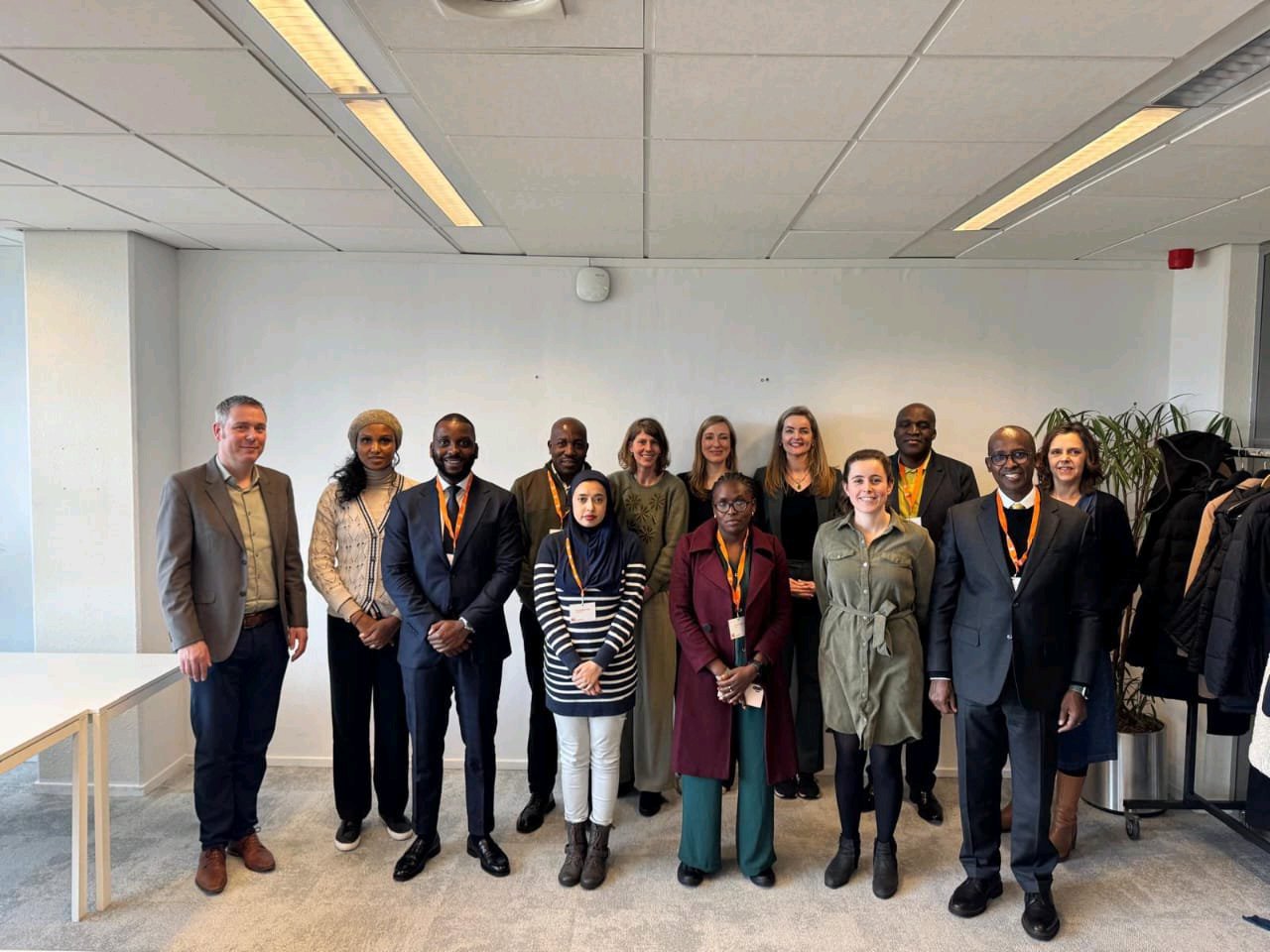
Uganda is intensifying its ambition to become a powerful export hub, as Odrek Rwabwogo, Chairman of the Presidential Advisory Committee on Exports and Industrial Development (PACEID), led a high-level engagement in The Hague with officials from the European Global Gateway Program. The discussions centered on establishing aggregation centers designed to streamline exports of food, processed minerals, and industrial goods to markets across Africa, Europe, the Middle East, and Asia.
Held at the Dutch Ministry of Foreign Affairs under the Department of Sustainable Economic Development, the meeting brought together influential figures in international trade and logistics. Chaired by Merchel Germann, the Netherlands’ Ambassador for Business Development, the session united key coordinators and policymakers committed to strengthening economic ties between Europe and Africa.
Among the participants were Annouk Baron, Global Gateway Project Coordinator, alongside Jeroen Muntinga, who oversees the Northern Corridor spanning Kenya, Uganda, Rwanda, and the Democratic Republic of Congo. Omar Haggag, coordinator of the Lobito Corridor covering Angola, Zambia, and the DRC, also contributed insights. Together, they presented strategic plans to upgrade Africa’s logistics corridors and foster more efficient trade and bilateral exchange with the Netherlands.
A focal point of the dialogue was the Northern Corridor Digital Climate-Smart Green Lane initiative, a four-year €30 million project spearheaded by TradeMark Africa with backing from the European Union and the Dutch government. This initiative aims to revolutionize the export of perishable goods by improving logistics efficiency and sustainability across the region.
Rwabwogo highlighted Uganda’s steady progress in overcoming export challenges, particularly in meeting international food standards and improving certification systems. However, he emphasized that high logistics costs remain a major barrier, necessitating a coordinated approach through aggregation centers that can consolidate produce, stabilize supply chains, and reduce inefficiencies.
These centers, he explained, would serve as critical hubs where agricultural products are collected from farmers at fair prices, then dried, cooled, processed, packaged, and transported efficiently. They would also integrate data systems to enhance traceability and market responsiveness, ensuring that Uganda meets the demands of global buyers consistently.
Encouragingly, several Ugandan districts—including Ibanda, Kisoro, Tororo, Mbale, and Gulu—have already offered land to support the development of these facilities. This local commitment underscores a nationwide effort to address inconsistent supply issues that have historically affected Uganda’s reputation as a reliable sourcing destination.
Now in its fourth year, PACEID has significantly elevated Uganda’s export profile across key international markets, including Europe, North America, the Middle East, and Asia. The initiative has attracted growing investment and demand for products such as coffee, sesame, cocoa, vanilla, dairy, and beef, while also facilitating access to affordable export financing for businesses. With strengthened partnerships and infrastructure on the horizon, Uganda is positioning itself as a formidable player in global trade.
Forging New Trade Frontiers! Uganda’s Bold Push for Global Export Hubs Gains European Momentum
Related Articles
Mayiga’s Rallying Call! Unite, Mobilize, and Rebuild Buganda from the Ground Up
Charles Peter Mayiga has issued a strong appeal to leaders across the Buganda Kingdom, urging…

Minister Milly Babalanda Orders Early Preparations as Government Rolls Out National Cleaning Campaign
Minister for the Presidency Hon. Milly Babirye Babalanda has called on Resident District Commissioners (RDCs)…

DRAMA!! Kabale Pastor Claims He Caught Wife in Lodge With Another Man After Giving Her Money for Children’s Shopping
A dramatic domestic dispute has sparked widespread discussion in Kabale and neighboring districts after a…