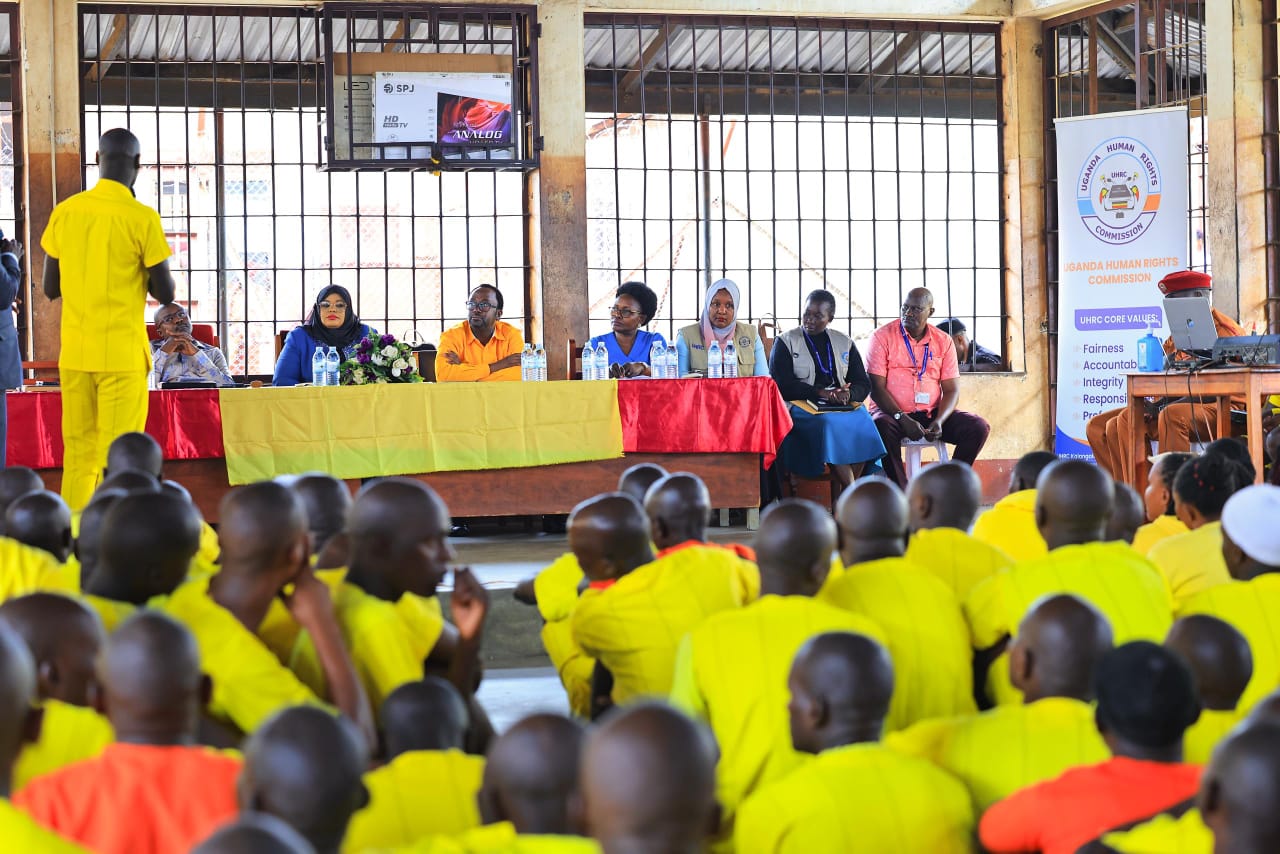
The Uganda Human Rights Commission (UHRC) has raised concerns over prison congestion, alleged torture of suspects and gaps in the protection of juveniles during an inspection of Masaka Central Government Prison.
The Commission members are currently inspecting the prison under the UHRC Masaka Regional Office as part of ongoing efforts to assess the human rights situation and engage stakeholders on challenges affecting the protection and promotion of human rights in the region.
The inspection team is being led by Commissioner Hon. Shifrah Lukwago on behalf of UHRC Chairperson Hon. Mariam Wangadya. She is supported by fellow Commissioners Hon. Crispin Kaheru and Hon. Simeo Muwanga Nsubuga, Director of Regional Services Ms. Sarah Nakhumitsa, Regional Head Ms. Justin Nambi Kasujja and other support staff from the Commission’s head office and Masaka Regional Office.
During the engagement, the Regional Prisons Commander, ASP Phelix Mugasa, told the Commission that inmates from Lwengo District are contributing to congestion at Masaka Central Government Prison.
According to Mugasa, although Lwengo has a prison facility, the district does not have a High Court. As a result, prisoners facing serious charges, particularly capital offences, have to be transferred to and kept at Masaka Prison as they wait for committal to the High Court.
The situation has increased the pressure on the available prison facilities in Masaka, with the Commission being informed about the challenges created by the continued holding of inmates from neighbouring areas.
The inspection also heard allegations of torture involving some inmates. Some prisoners reportedly alleged that their nails had been pulled out during interrogation while they were in police custody.
The allegations are among the concerns that the Commission is expected to examine as it assesses the treatment of prisoners and the observance of human rights by security and justice institutions in the region.
The engagement also began with a meeting with prison staff, during which Ms. Justin Nambi Kasujja highlighted several human rights concerns affecting communities in the Masaka region.
One of the issues raised was alleged discrimination against people living with HIV/AIDS in employment. Nambi said one of the palm oil companies in the region, Oil Palm Uganda Limited, allegedly does not employ people living with HIV/AIDS.
She said prospective employees are first tested and that those who are found to be HIV-positive are allegedly not offered employment, raising concerns about discrimination and the protection of the rights of people living with HIV.
Nambi also raised concerns about the lack of a remand home for juveniles in the region. She explained that children in conflict with the law have to be transported to facilities such as Naguru in Kampala or Kampiringisa in Mpigi District.
According to her, the situation is made more difficult by inadequate facilitation of the police, who are responsible for transporting and handling such juveniles.
She further alleged that in some cases, police officers are forced to increase the recorded age of juveniles so that they can be detained in adult cells when appropriate juvenile facilities are unavailable.
The concerns highlight challenges within the justice system, particularly in ensuring that children in conflict with the law are handled separately from adults and in accordance with their rights.
The UHRC engagement in Masaka is part of the Commission’s wider efforts to strengthen the protection and promotion of human rights at the regional level. Through inspections and meetings with prison authorities, police, local leaders and other stakeholders, the Commission seeks to identify rights violations and institutional challenges requiring attention.
The Masaka inspection has therefore brought together a number of concerns ranging from prison congestion and alleged torture to employment discrimination and the lack of suitable facilities for juveniles, giving the Commission several issues to follow up with the relevant authorities.