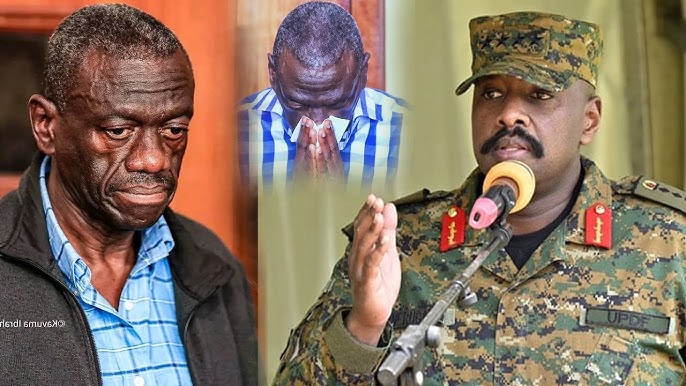
Gen. Salim Saleh has reportedly intervened in the ongoing controversy surrounding the detention and prosecution of opposition figures Dr. Kizza Besigye and Erias Lukwago by directing Chief of Defence Forces Gen. Muhoozi Kainerugaba to facilitate a briefing for Justice and Constitutional Affairs Minister Norbert Mao.
The development has attracted significant public attention because it involves some of the country’s most influential political and security figures at a time when debate over the treatment of opposition leaders continues to dominate national discussions.
According to reports, the intervention followed concerns raised by Mao regarding limited access to information surrounding investigations and security operations involving Besigye, Lukwago and other individuals linked to the cases.
In a communication that has since circulated widely online, Saleh reportedly emphasized that Mao has both legal and political responsibilities that require him to understand the circumstances surrounding the high-profile cases.
The senior government official reportedly noted that as Minister of Justice and Constitutional Affairs, Mao occupies a position that requires him to respond to public concerns regarding the actions of state institutions and the implementation of justice-related processes.
Saleh is said to have pointed out that Mao’s responsibilities extend beyond routine ministerial duties because he also plays an important role within the Justice, Law and Order Sector, commonly known as JLOS.

According to the reported communication, Mao may not automatically have access to all information held by military and intelligence agencies, making it necessary for him to receive a formal briefing from the relevant security authorities.
The reported request has generated widespread interest because it suggests an effort to improve communication between civilian government institutions and security agencies on matters that have become the subject of intense public scrutiny.
Political observers note that coordination between ministries and security agencies becomes especially important when cases involve prominent political figures whose arrests attract national and international attention.
Dr. Kizza Besigye remains one of Uganda’s most recognizable opposition figures, and developments involving him have historically generated significant public debate across the political spectrum.
Similarly, Erias Lukwago has long been a prominent opposition leader whose legal and political battles frequently attract strong reactions from both supporters and critics of the government.
The arrests and prosecution of the two leaders have fueled discussions about national security, constitutional rights and the role of security agencies in handling politically sensitive matters.
Opposition politicians have repeatedly questioned the legal basis of some of the actions taken against government critics, while government officials insist that security agencies operate within the law and in the interest of national stability.
The latest reported intervention by Saleh has therefore been interpreted by some analysts as an effort to ensure that senior government officials have access to information necessary to address public concerns and explain government actions.

Others see the development as evidence of the growing pressure on state institutions to provide greater transparency regarding high-profile investigations and detentions.
The reported communication has also sparked discussion about Norbert Mao’s unique position within government, given his background as a former opposition leader before joining the administration.
Supporters of Mao argue that his political experience places him in a strong position to engage with concerns raised by both government supporters and opposition activists.
Meanwhile, legal experts continue to debate various aspects of the cases involving Besigye and Lukwago, including questions related to jurisdiction, detention procedures and constitutional protections.
As public interest in the matter continues to grow, many observers are watching closely to see whether Mao will eventually receive the requested briefing and what impact such access could have on public understanding of the ongoing cases.
For now, Saleh’s reported appeal to Gen. Muhoozi has added another significant dimension to an already complex political and legal story, further highlighting the national importance of the cases involving some of Uganda’s most prominent opposition figures.