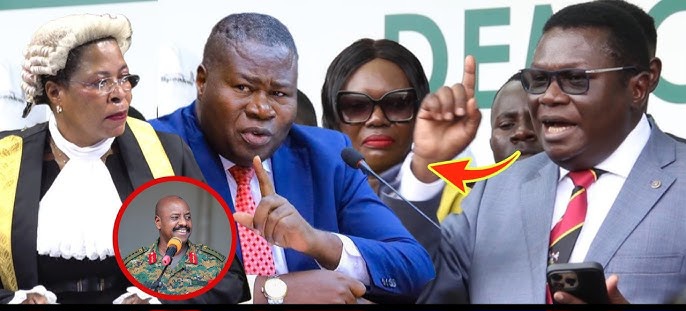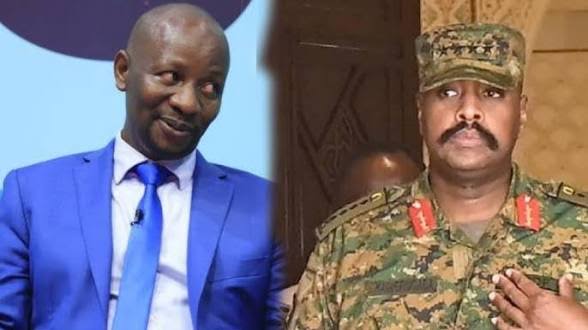
Gen. Muhoozi Kainerugaba has sparked fresh political controversy after remarks circulating on social media in which he is said to have commented on opposition politicians, including Ibrahim Ssemujju Nganda and Erias Lukwago, drawing widespread public reaction.
The comments, which quickly spread online, suggest a comparison between how different opposition figures could be treated depending on their conduct and willingness to seek reconciliation.
According to the widely shared posts, the statements have been interpreted by many as linking political disagreements with personal consequences, a framing that has triggered intense debate across Uganda’s political space.
Erias Lukwago, a former Kampala Lord Mayor and prominent opposition figure, was recently arrested and charged with misprision of treason, a development that has already generated strong reactions from political actors and civil society.
His detention has been strongly criticized by opposition supporters, who argue that the charges are politically motivated and aimed at weakening dissenting voices.
The latest controversy involving remarks attributed to Muhoozi has now expanded the discussion to include other opposition figures, including Ssemujju Nganda, a former Kira Municipality MP and outspoken political commentator.

Supporters of Ssemujju have expressed concern over the tone of the remarks circulating online, warning that such statements risk escalating political tensions.
Human rights advocates have also emphasized the importance of ensuring that all citizens, regardless of political affiliation, are treated equally under the law and are protected from intimidation.
Legal experts note that Uganda’s justice system requires all allegations to be handled through formal judicial procedures rather than public declarations or personal political statements.
Opposition supporters argue that linking legal outcomes to personal apology or political alignment undermines the independence of state institutions.
They further insist that political disagreement should not be treated as a basis for threats or differential treatment before the law.
Supporters of Muhoozi, however, interpret his comments differently, saying they reflect frustration with opposition leaders who frequently criticize government institutions and policies.
They argue that political leaders should be accountable for their statements and actions, especially when they relate to national security or governance.
The debate has rapidly spread across social media, where Ugandans continue to express sharply divided opinions about the remarks and their implications.
Some users have defended a tough stance on opposition figures, while others have condemned what they see as dangerous political rhetoric.

Political analysts say the situation reflects a broader pattern of increasingly direct and confrontational communication between influential political actors in Uganda.
They note that such exchanges often intensify public emotions and contribute to a more polarized political environment.
The discussion also highlights ongoing tensions surrounding the role of opposition leaders in Uganda and the limits of political expression in highly sensitive cases.
Civil society groups have called for calm and urged all political actors to avoid statements that could be interpreted as encouraging intimidation or selective treatment under the law.
As reactions continue to emerge, authorities have not issued any official clarification regarding the remarks circulating online.
For now, both Ssemujju Nganda and Erias Lukwago remain central figures in Uganda’s political discourse, while the debate surrounding the comments attributed to Muhoozi continues to dominate public conversation.