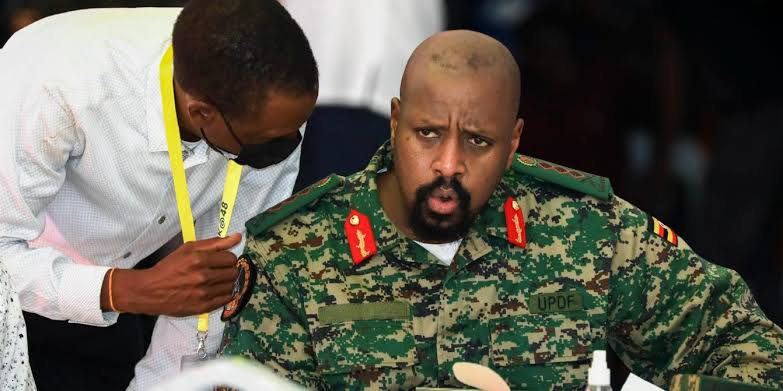
A fresh political controversy has erupted after Chief of Defence Forces Muhoozi Kainerugaba reportedly made comments on social media suggesting that he would like to shut down two of Uganda’s most prominent media outlets.
The remarks, which quickly circulated across various online platforms, attracted widespread attention due to the significance of the institutions mentioned and the senior position held by the military chief.
According to screenshots and accounts shared online, Muhoozi allegedly stated that he wanted to switch off Daily Monitor and NTV Uganda, adding that he only needed approval from “Mzee,” a term commonly used to refer to President Museveni.
The comments immediately generated intense debate among journalists, political activists, opposition supporters, and members of the general public who closely follow developments involving freedom of expression and media independence.
Many observers interpreted the statement as another example of the increasingly tense relationship that has occasionally existed between sections of the media and government officials.
For years, both Daily Monitor and NTV Uganda have established themselves as influential news organizations that cover politics, governance, business, and social issues affecting Ugandans across the country.

Supporters of the two media houses argued that their role is to report news, investigate matters of public interest, and hold leaders accountable regardless of political affiliation.
Some members of the public claimed that government officials often become frustrated when media organizations publish stories highlighting alleged failures, controversies, or misconduct involving state institutions.
Others argued that critical reporting should not automatically be interpreted as hostility toward the government but rather as part of the media’s responsibility in a democratic society.
The reported remarks also revived broader discussions about press freedom and the ability of journalists to operate without fear of intimidation or retaliation.
Media rights advocates noted that independent journalism plays an important role in informing citizens and enabling public debate on issues of national importance.
Several commentators pointed out that statements made by high-ranking officials often attract heightened scrutiny because they can influence public perception and generate concerns about institutional intentions.
Political analysts observed that even when comments are made on social media, they can quickly evolve into major national conversations due to the influence of the individuals involved.
The incident sparked numerous reactions online, with supporters and critics offering sharply different interpretations of what the remarks may have meant.
Some government supporters dismissed the comments as political rhetoric, arguing that social media exchanges are often provocative and should not always be interpreted as official policy positions.
Critics, however, expressed concern that references to shutting down media organizations could create anxiety among journalists and media practitioners already operating in a highly competitive and politically sensitive environment.

The controversy has also highlighted the growing importance of digital platforms in shaping political narratives, where a single post can dominate national discussion within hours.
As public debate intensified, attention shifted to whether any formal government institution would comment on the remarks or clarify the government’s position regarding the media organizations mentioned.
Neither Daily Monitor nor NTV Uganda has been a stranger to reporting on politically sensitive matters, and both outlets have frequently covered stories involving government officials, opposition leaders, and public accountability.
Their reporting has often generated public discussion on governance, corruption allegations, security matters, elections, and other issues considered important to Uganda’s political landscape.
For many Ugandans, the latest controversy goes beyond a dispute between political leaders and media houses, touching on larger questions about freedom of the press, public accountability, and the role of journalism in national development.
As reactions continue to pour in from across the political spectrum, the reported comments are likely to remain a subject of discussion among journalists, civil society groups, politicians, and ordinary citizens concerned about the future of independent media in Uganda.