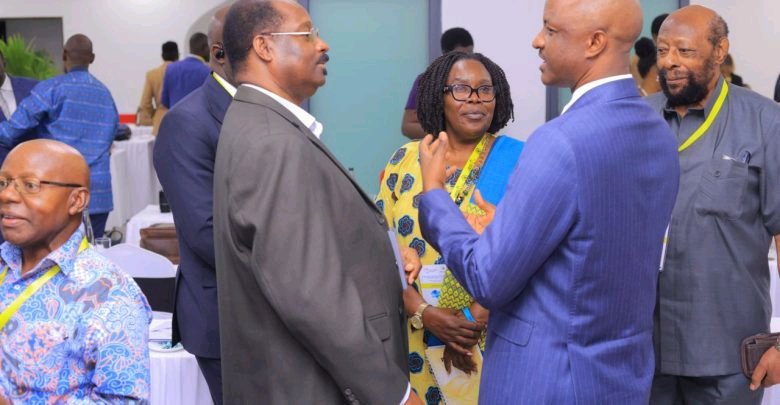
Uganda has unveiled a decisive new direction for its foreign missions, linking government funding directly to measurable economic performance. Speaking in Mombasa, Uganda’s Permanent Secretary and Secretary to the Treasury, Ramathan Ggoobi, told ambassadors that financial support for embassies will now depend on their ability to deliver clear commercial gains for the country.
The announcement was made during a three-day Mid-Term Evaluation Retreat reviewing Uganda’s Africa-based missions and their implementation of the Economic and Commercial Diplomacy strategy. Ggoobi stressed that the exercise was not a routine administrative check, but a strategic assessment of return on investment.
Missions demonstrating strong results would receive greater backing, while those falling short would undergo restructuring or receive targeted support to overcome constraints.According to Ggoobi, the review sought to answer fundamental questions about performance and impact. Officials examined which embassies are successfully unlocking economic opportunities across Africa, which strategies are producing results, and what immediate adjustments are required to accelerate outcomes.
He emphasized that Uganda’s diplomatic presence must move beyond traditional political engagement and focus squarely on trade, investment, and market expansion. Africa, he noted, remains Uganda’s primary sphere of competitive advantage, and every diplomatic initiative must be judged by a single benchmark: its ability to open markets and generate economic value for Ugandan businesses.
The retreat, held at Bamburi Beach Hotel from February 22 to 24, forms part of Uganda’s broader ambition to multiply economic growth through expanded production, tourism, exports, and investment flows. The government’s tenfold growth strategy envisions a faster, more coordinated approach to economic transformation, with foreign missions positioned as frontline drivers of that agenda.Permanent Secretary at the Ministry of Foreign Affairs, Vincent Bagiire Waiswa, reinforced the need to equip diplomats with stronger technical and sector-specific expertise. He indicated that Foreign Service Officers will gain hands-on exposure within key ministries, departments, and agencies to better understand Uganda’s products, regulatory systems, and investment priorities before marketing them abroad.
To further strengthen implementation, the government has established an Economic and Commercial Diplomacy hub and a dedicated secretariat within the Ministries of Foreign Affairs and Finance. These units are tasked with boosting research capacity and ensuring missions rely on verified, high-quality data when pursuing trade and investment opportunities.
By the end of the opening day, participants had agreed on the importance of setting clear commercial targets, identifying priority sectors, mapping out potential investors and buyers, and crafting practical, measurable action plans for the next five years. With the Ministry of Finance committing continued backing to well-performing missions, Uganda’s diplomatic corps now enters a new era—one defined not just by representation abroad, but by concrete economic impact at home.