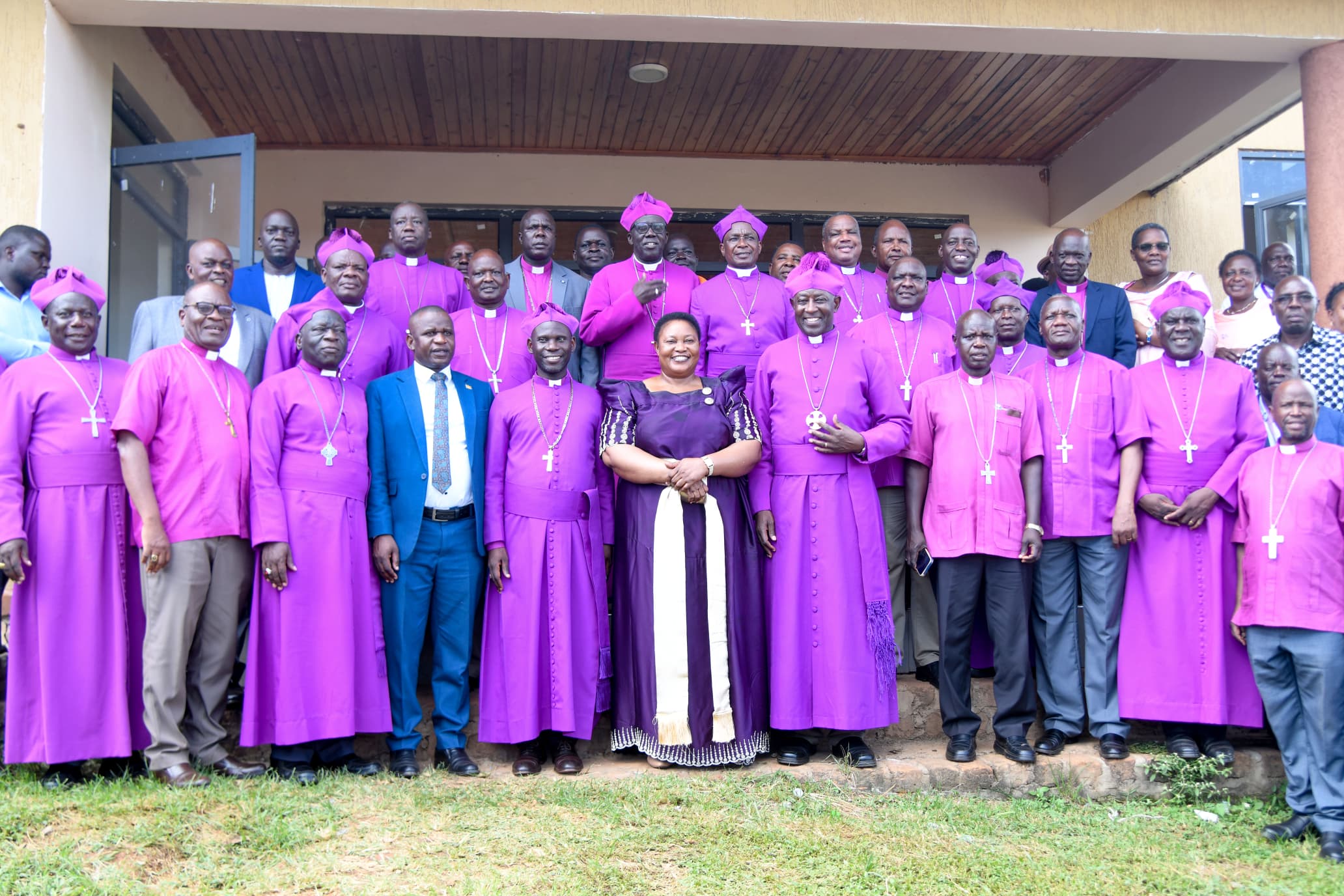
President Yoweri Kaguta Museveni has urged the Church of Uganda and other religious institutions to take a leading role in fighting poverty by encouraging Christians to embrace wealth creation, hard work and economic empowerment. The President said religious leaders should go beyond preaching the Gospel and help their followers improve their household incomes through productive economic activities. He made the call in a message delivered by the Minister for the Presidency and Budiope West MP, Hon. Babirye Milly Babalanda, during the 141st commemoration of Bishop James Hannington at Kyando Village in Mayuge District.
The annual event brought together Christians and other leaders to remember Bishop Hannington, an Anglican missionary who was killed on October 29, 1885, during his mission to spread Christianity in Uganda. Museveni praised the Church of Uganda, the organising committee and the people of Busoga for preserving the memory of the missionary, whose death remains an important chapter in the country’s Christian history. He said the commemoration should inspire believers to reflect on the values of courage, faith, sacrifice and service to humanity, while considering how these principles can contribute to the country’s development.
Bishop Hannington first travelled to Uganda from England in 1882 but faced several challenges during his missionary journey, forcing him to return home. After recovering his health, he organised another expedition in 1885, hoping to continue his evangelical work. However, his mission was misunderstood, and he was detained as he approached Uganda. He was subsequently killed on the orders of Kabaka Mwanga II through Busoga Chief Luba. Museveni said the missionary’s sacrifice, alongside that of other Christian martyrs, helped shape the history of Christianity and continues to offer an example of commitment to faith.
The President also drew parallels between the Bishop Hannington commemoration and Uganda Martyrs Day, which is observed every June 3. He said the lives of Christians who endured persecution and died for their beliefs demonstrate the depth of their faith and their willingness to stand by their convictions. Museveni called on Christians to draw lessons from these historical figures by living exemplary lives, upholding moral values and guiding young people towards discipline, responsibility and respect for others. He emphasised that religious teachings should help build a generation capable of contributing positively to society.
Museveni further recognised the contribution of the Church of Uganda and other religious organisations to the country’s social and economic development. He noted that churches have established schools, hospitals, health centres and other institutions that continue to serve millions of Ugandans, particularly in rural communities where access to essential services can be limited. According to the President, religious institutions have played an important role in improving education, healthcare and moral development. He said the Government values these contributions and believes that continued cooperation between the State and religious leaders is necessary to address the country’s development challenges.
Turning to poverty reduction, Museveni encouraged the Church to mobilise Christians to participate in government wealth-creation programmes, including Operation Wealth Creation, Emyooga and the Parish Development Model. He said the initiatives are intended to help households engage in productive enterprises, increase their earnings and improve their standards of living. The President stressed that national development cannot be achieved by Government alone, adding that religious institutions, cultural leaders, the private sector and civil society all have important roles to play. He urged church leaders to encourage their followers to take advantage of available economic opportunities instead of remaining outside productive activities.
As part of his support for the Church, Museveni contributed Shs30 million towards its work. Minister Babalanda thanked the President for recognising Bishop Hannington’s legacy and supporting the Church’s contribution to national development. She urged religious leaders to combine spiritual guidance with practical messages about wealth creation, hard work, discipline and financial responsibility.
Babalanda said the fight against poverty requires collective effort and encouraged Christians to use government programmes and their individual skills to improve their livelihoods. She also called on believers to participate actively in community development through their respective professions and economic activities.
The commemoration concluded with renewed calls for Christians to preserve their faith, uphold moral integrity and contribute to the welfare of their communities. While Bishop Hannington’s death remains a powerful symbol of religious sacrifice, the message delivered on Museveni’s behalf placed equal emphasis on the responsibility of faith-based institutions to address the everyday challenges facing Ugandans. The event in Mayuge therefore served not only as a remembrance of a historic Christian martyr but also as an appeal for stronger cooperation between the Church and Government in fighting poverty, promoting responsible citizenship and advancing household economic transformation.