The National Water and Sewerage Corporation (NWSC) is embarking on an ambitious expansion drive aimed at connecting an additional 1.25 million customers to its water network by 2030, as Uganda faces growing demand for reliable water and sanitation services.
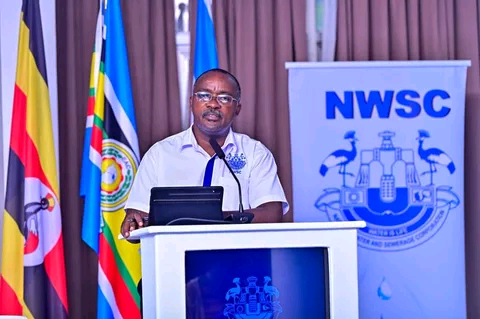
The plan was revealed during a national stakeholder engagement held on August 14 at the NWSC International Resource Centre in Bugolobi, where the corporation presented its achievements, challenges and strategic priorities to stakeholders, including members of the media.
NWSC Managing Director Eng. Dr Silver Mugisha said the corporation’s service network has expanded significantly over the years, with its water pipeline network increasing from approximately 6,000 kilometres to 25,000 kilometres. The corporation plans to extend the network to about 30,000 kilometres over the next five years.
Mugisha said NWSC’s operational footprint has also grown from just 23 towns to 290 towns, while the number of people served has increased from roughly 4.5 million to 22 million. The corporation now aims to reach 25 million people within the next five years and increase assets under its management from about Shs5 trillion to Shs6.2 trillion.
The Managing Director said NWSC is increasingly relying on its own engineers and technical specialists to design and implement major projects, a move he said is reducing expenditure on external consultants while strengthening the corporation’s technical capacity. He cited the rapid restoration of its billing and electronic payment systems as an example of the benefits of having in-house expertise.
NWSC has also changed its approach to managing operational risks after determining that annual insurance costs were considerably higher than the compensation received through claims. Mugisha said the corporation had been paying about Shs2.5 billion annually in insurance premiums while receiving an average of only Shs400 million in claims, prompting the adoption of a risk-retention model and establishment of an internal risk management company and fund.
However, the rapid expansion of Greater Kampala continues to present serious challenges for water and sanitation services. NWSC Kampala General Manager Eng. Mahmood Lataaya said the metropolitan area is expanding both outward and vertically, particularly as high-rise developments increase pressure on existing infrastructure.
Lataaya explained that the growing population and new developments are forcing NWSC to replace smaller, older pipelines with larger systems capable of meeting increased demand. Water stress has been reported in parts of western Kampala and surrounding areas including Nansana, Kawempe, Buloba, Buddo, Matugga and Kakiri, while sewerage expansion has lagged behind the growth in water supply.
NWSC says sustained investment in major water and sanitation projects will therefore be critical as Uganda’s urban population continues to rise. The corporation believes expanding its network, strengthening internal technical capacity and upgrading infrastructure will be key to ensuring more Ugandans have access to safe, reliable and affordable water and improved sanitation by 2030.