Works and Transport Minister Fred Byamukama is expected to announce new safety measures for buses, public-service vehicles and passenger transport operators as the government moves to tighten regulation following a series of deadly road crashes.
Byamukama is currently meeting bus operators and other transport stakeholders at the Ministry of Works and Transport headquarters, where discussions are expected to focus on driver management, vehicle safety and compliance with road regulations.
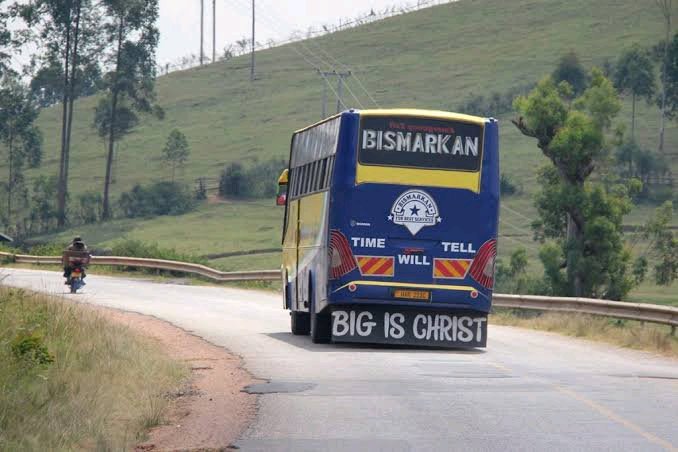
The meeting comes amid growing concern over the increasing number of fatal crashes involving passenger vehicles across the country. Authorities have linked several of the accidents to speeding, reckless overtaking, driver fatigue, mechanical defects and gaps in enforcement.
The government has already started introducing measures aimed at reducing the amount of time drivers spend behind the wheel. Last week, Byamukama announced that buses travelling more than 300 kilometres would be required to use different drivers for the outbound and return journeys.
Under the directive, a driver who completes a journey of more than 300 kilometres would not be allowed to drive the same bus back to the starting point. For journeys shorter than 300 kilometres, a driver would be allowed to travel to the destination and return once, after which they would be required to stop working for the day.
Traffic Police has been directed to enforce the requirement and take action against operators and drivers who violate the new rules.
The tougher approach follows a series of crashes that have claimed the lives of passengers, students and other road users.
On July 7, at least 14 people were killed and 28 others injured when an Opit Travellers bus collided with a trailer at Bobi Trading Centre along the Kampala-Gulu Highway in Omoro District. Preliminary police findings attributed the crash to reckless driving.
A week later, a bus carrying more than 70 students from Mwebaza High School to Jinja collided with a passenger train at the Namumira railway crossing in Mukono District. One teacher was killed while several students were injured.
Another school bus carrying students from St Paul Secondary School in Katakwi crashed along the Mbale-Iganga Highway after hitting a stationary trailer. The driver was killed and 15 people, most of them students, were injured.
The country was further shocked on July 16 when a King David Junior School bus carrying pupils from an educational trip to Sipi Falls crashed at Chekwatit along the Kapchorwa-Mbale Road. Police later confirmed that 24 people, including the driver, died in the accident.
Following the tragedy, the Ministry of Education and Sports suspended school trips and excursions, although Police later clarified that the suspension applied to vehicles transporting learners on school trips and not ordinary public transport buses.
Beyond driver fatigue, the government is also looking at technology as a way of improving monitoring. The Works and Transport Ministry has proposed an electronic clocking-in system for public-service vehicle drivers to help authorities track driving hours, rest periods and speeding.
The proposal was presented to Parliament’s Committee on Physical Infrastructure in July after the ministry reviewed a number of road crashes.
The ministry said investigations had revealed several violations, including the use of unlicensed buses, unaccredited drivers and mechanically defective vehicles. Weak enforcement has also been identified as a major challenge.
Government is also considering stronger digital verification systems to identify unlicensed vehicles and unauthorised drivers as part of efforts to improve road safety and strengthen the National Road Safety Action Plan.
The crackdown is not limited to passenger buses. Earlier this month, the government ordered all Sino trucks to undergo mandatory mechanical inspections within two months, warning that vehicles that fail to meet safety requirements could be removed from the roads.
Authorities have also previously suspended operators whose safety records raised serious concerns. In May, Nile Star bus operations were suspended for 30 days following a crash in Nwoya District that killed seven passengers and seriously injured 16 others.
The ministry said Nile Star buses had been involved in 11 crashes in the preceding year, resulting in 91 deaths and 56 injuries. Driver fatigue and poor management of driver schedules were among the concerns raised.
The road safety crisis has continued in recent weeks. On August 4, at least 14 people were killed in Kalungu District when a passenger van collided with a sand-carrying truck. Four others were injured in the crash, while the truck driver reportedly fled the scene.
With more passengers relying on buses, taxis and other public-service vehicles to travel across the country, the government is under increasing pressure to ensure that operators put safety ahead of profits.
The measures expected from Byamukama’s meeting with transport operators could therefore mark another major step in the government’s efforts to strengthen passenger transport regulation, improve driver discipline and ensure that only roadworthy vehicles and qualified drivers are allowed to operate.
More details are expected after the minister concludes his engagement with bus operators and other transport stakeholders.