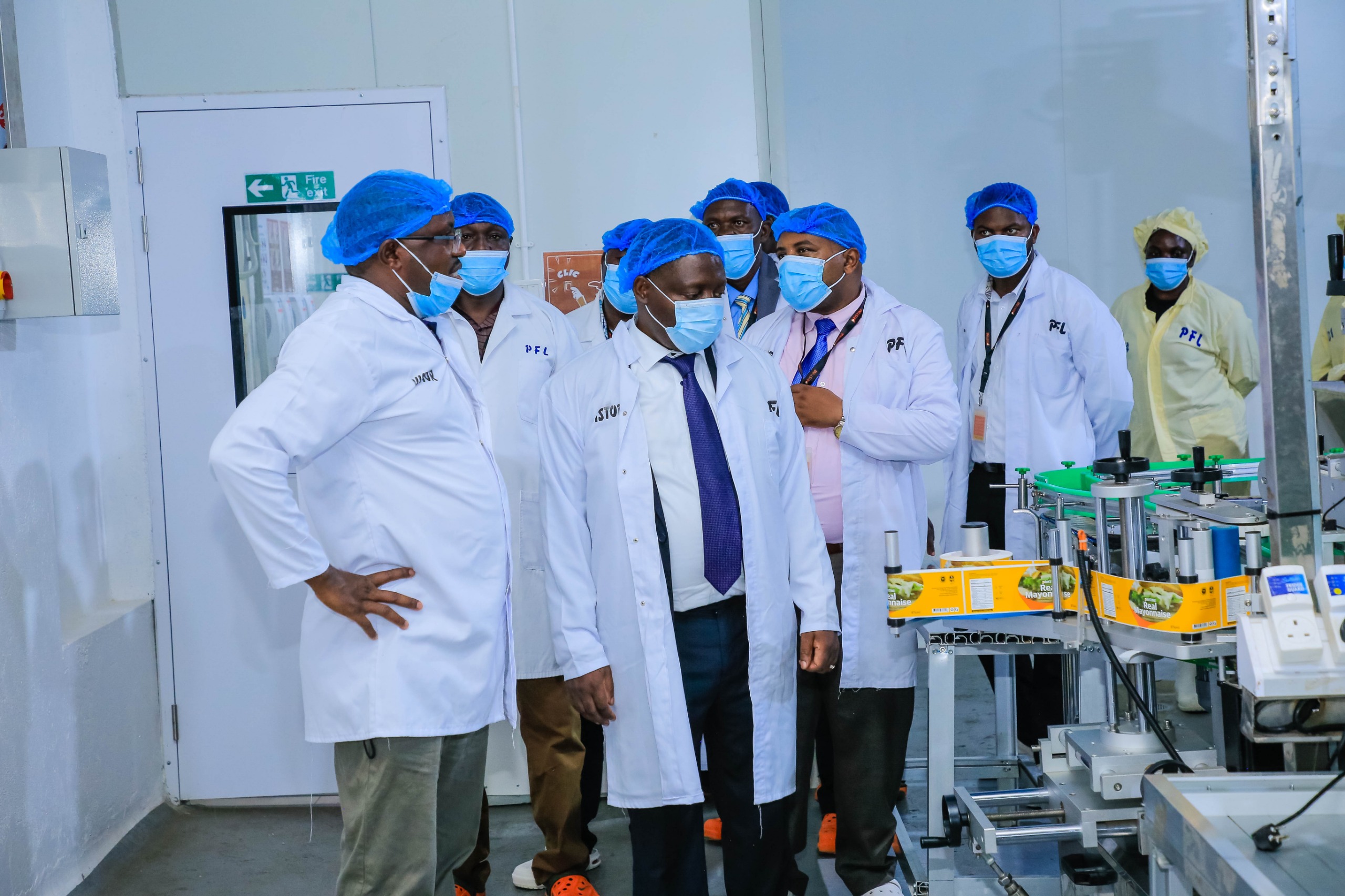
Uganda’s commercial poultry industry is set for a major transformation as the Government moves to promote egg processing and value addition, with the country’s first privately owned egg processing factory expected to process up to 15,000 trays of eggs every day.
The development is expected to create a new market for poultry farmers while reducing dependence on the sale of fresh eggs and opening opportunities for higher-value poultry products for both domestic and regional markets.
The Minister of State for Trade and Industry, David Bahati, disclosed the plans this afternoon while inspecting Pristine Foods Limited, an egg processing facility located in Kamuli, Kireka, Wakiso District.
Bahati said the Government is committed to turning poultry farming into a more lucrative and profitable business by encouraging investment in processing, value addition and market development.
Uganda’s poultry sector has recorded steady growth, expanding at an average annual rate of about 4.4 percent. The sector remains important to household incomes, domestic food security and regional trade, with poultry products increasingly finding markets beyond Uganda’s borders.
According to figures from the Food and Agriculture Organization of the United Nations (FAO), Uganda produces approximately 44,000 to 45,000 metric tonnes of chicken eggs annually. However, the country continues to face a major challenge of low domestic egg consumption despite the significant production levels.
Ugandans consume an estimated 0.75 to one kilogramme of eggs per person annually, equivalent to roughly 15 to 20 eggs per person. This remains low compared with global consumption levels and nutritional recommendations that encourage regular egg consumption as a source of protein and essential micronutrients.
The establishment of egg processing facilities could therefore provide an important avenue for expanding consumption while creating alternative markets for farmers.
Pristine Foods is processing fresh shell eggs into more stable and higher-value industrial products, including whole egg powder, liquid yolks and egg whites. Such products can be used by food manufacturers, bakeries, hotels, restaurants and other businesses that require eggs as an ingredient.
The processing model could also help address some of the challenges faced by poultry farmers, particularly price fluctuations and losses associated with limited markets for fresh eggs.
Eggs are already widely consumed in Uganda, particularly in urban areas where they are commonly used in roadside fast-food businesses. They are also supplied to schools, hotels and restaurants, while significant quantities are traded across borders.
Uganda’s neighbouring markets, including Kenya and South Sudan, remain important destinations for poultry products, providing opportunities for processors to expand their operations and earn foreign exchange.
Government’s focus on value addition is therefore expected to link farmers more directly to industrial markets while encouraging investment in modern poultry-related enterprises.
With the planned processing capacity of 15,000 trays per day, the facility represents a significant step toward creating a more organised egg value chain in Uganda.
The Government is expected to continue supporting investments that can transform poultry farming from largely small-scale production into a commercially viable industry capable of generating employment, increasing farmer incomes, strengthening food security and expanding Uganda’s regional exports.