The Uganda Registration Services Bureau (URSB) is stepping up its role in Uganda’s commercial justice system through the increased use of Alternative Dispute Resolution (ADR) and its quasi-judicial powers to settle business disputes and protect the integrity of corporate records.
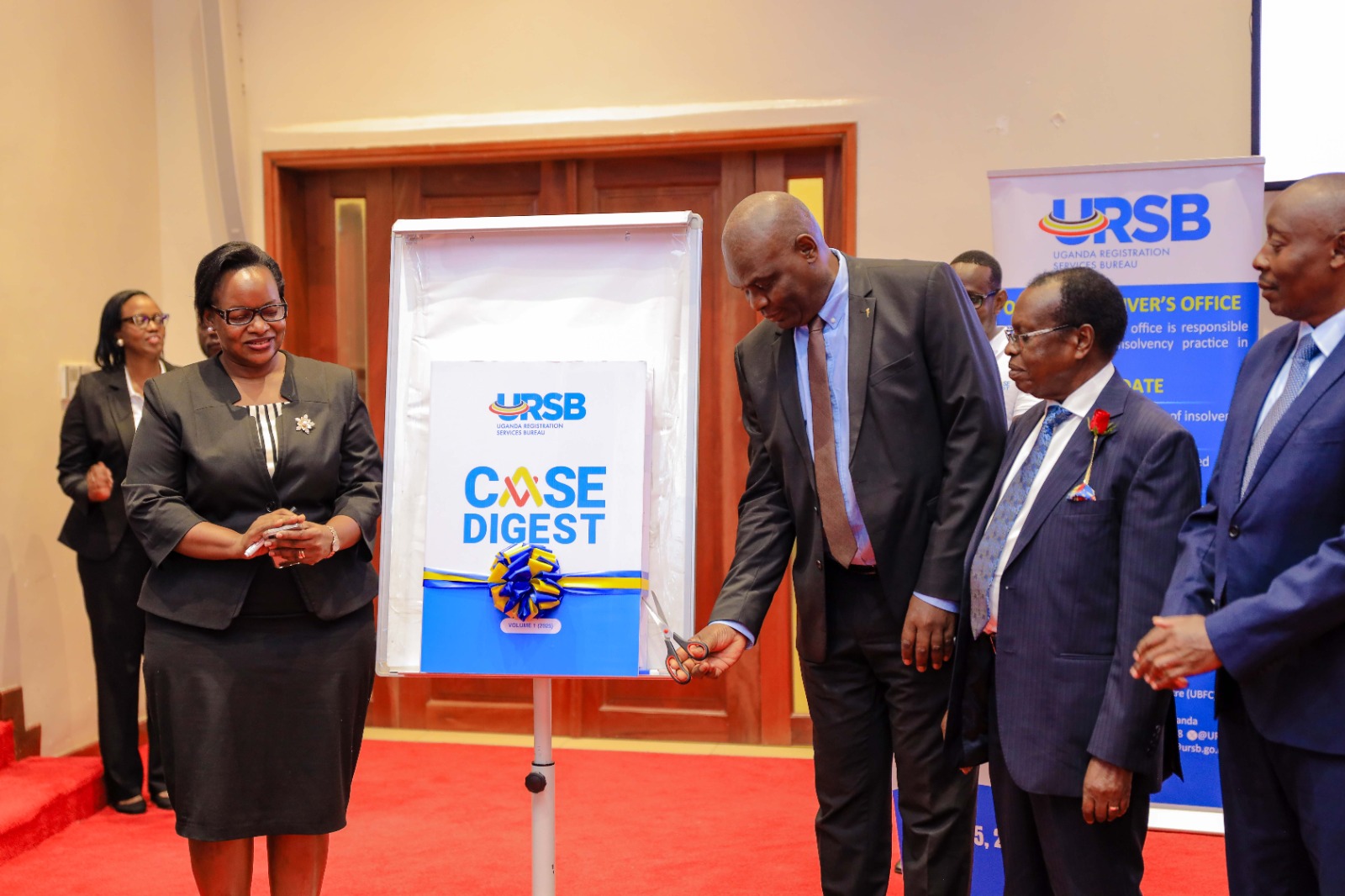
The move is detailed in the URSB Case Digest, Volume II, 2026, a publication featuring selected decisions of the Bureau together with relevant court decisions. The Digest is intended to provide businesses, legal practitioners, regulators and other stakeholders with a practical understanding of how laws administered by URSB are interpreted and applied in commercial disputes.
URSB Board Chairman Rt. Hon. Amb. Francis K. Butagira said the Bureau’s quasi-judicial mandate has become an important component of an effective business environment. He said the function allows URSB to offer an accessible mechanism for resolving disputes while addressing irregularities in company registers and protecting the interests of businesses and the public.
According to the Board Chairman, the decisions featured in the Digest reflect URSB’s commitment to ensuring that business registers remain accurate and reliable. He said the approach also demonstrates the Bureau’s effort to administer commercial justice in a manner that is fair, transparent and responsive to the changing needs of Uganda’s business and investment community.
Registrar General Ms. Mercy K. Kainobwisho said disputes involving company ownership, shareholding, management, governance, membership and intellectual property can have far-reaching economic consequences. She noted that the Registrar’s quasi-judicial powers give affected parties an affordable and efficient avenue for addressing such disputes without depending entirely on conventional court proceedings.
URSB has also embraced ADR and administrative procedures as tools for reducing the time and expenses associated with commercial disagreements. The mechanisms are intended to provide practical solutions that allow businesses to resolve disputes more efficiently, minimise disruption and continue their operations while protecting the rights of the parties involved.
The cases highlighted in the Digest demonstrate the breadth of matters handled under the Registrar’s quasi-judicial mandate. They include disputes over share transfers, shareholder rights, company governance, minority oppression and the correction of company registers. In one matter, the Registrar ordered a company register to be rectified after finding that documents used to appoint a director and allot shares had not been validly authorised.
The Case Digest is ultimately positioned as a tool for strengthening transparency and predictability in Uganda’s commercial sector. By publishing selected decisions, URSB is giving businesses and practitioners greater insight into the application of corporate and commercial laws while reinforcing its commitment to efficient dispute resolution, credible registries and a business environment where investors can operate with greater certainty and confidence.