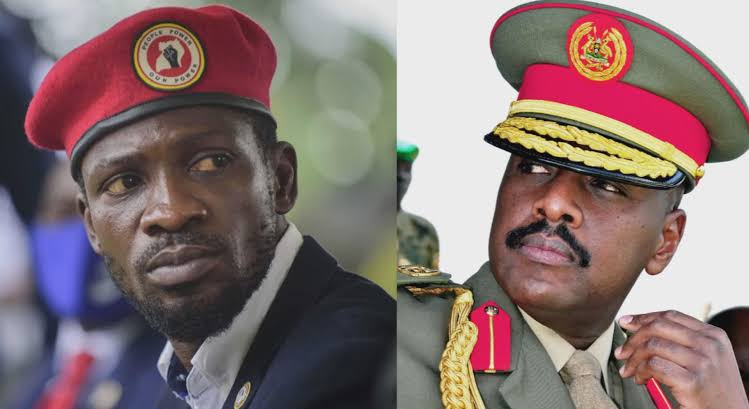
International Law and Extradition: A Path To Justice Or A Legal Nightmare? The Case Of Lt. Katungi!
By Barrister Peter Magomu Mashate
The United Kingdom and the United States operate under a formal and active extradition arrangement established through the UK–US Extradition Treaty of 2003, a treaty ratified by the U.S. Senate and implemented in Britain through the Extradition Act 2003.
The treaty provides a framework for the reciprocal surrender of persons wanted for prosecution or punishment for serious criminal offences. Although the arrangement applies equally to citizens of both countries, concerns have frequently been raised about perceived imbalances within the process, particularly because the United States is not required to present a prima facie case when seeking extradition from the United Kingdom.
However, the extradition request directed at Ugandan Lt. Katungi appears to be one in which the United States is seeking surrender without first establishing a prima facie case. This raises critical questions concerning sovereignty and the limits of foreign jurisdiction. Even assuming the request is legally supported—which remains open to debate—it would still be subject to constitutional safeguards and internationally recognized exceptions, as demonstrated in the landmark cases of former Chilean leader Gen. Augusto Pinochet and WikiLeaks publisher Julian Assange.
Unlike the United Kingdom, Uganda has no extradition treaty with the United States. There is currently no formal bilateral extradition agreement between Kampala and Washington.
As a result, legal and political controversy inevitably arises whenever the United States seeks the surrender of an individual from Uganda.
Indeed, high-profile cases involving requests for the extradition of Ugandan citizens, including Lt. Katungi, have generated significant debate regarding whether Ugandan courts possess a sufficient legal foundation to authorize extradition in the absence of a signed and domesticated bilateral treaty.
The only binding non-surrender arrangement shared by Uganda and the United States is the Article 98 Agreement signed in 2003, which prevents either country from surrendering the other’s citizens to the International Criminal Court without consent. In reality, the stronger beneficiary of this arrangement is the United States because Uganda is a member of the ICC while Washington has consistently refused to submit itself to the court’s jurisdiction.
Uganda also has no prisoner transfer or prisoner exchange treaty with the United States. While Uganda enacted the Transfer of Convicted Offenders Act to facilitate prisoner repatriation, no corresponding bilateral framework exists with Washington. Such arrangements have instead been concluded with countries including the United Kingdom, China, Turkey and South Korea.
Although there is no prisoner exchange agreement between the two nations, Uganda and the United States do maintain cooperation on immigration matters, including arrangements through which Uganda receives deported migrants and asylum seekers from the United States.
The late Kampala Mayor, Nasser Ntege Sebaggala, served his prison sentence entirely in the United States because no prisoner transfer arrangement existed between the two countries. Consequently, if Lt. Katungi or any other Ugandan citizen were extradited to the United States, Uganda would have limited influence over what follows thereafter. Many would view this as an unequal relationship within the broader administration of justice.
EXAMPLES IN INTERNATIONAL LAW & THE EXTRADITION OF FORMER CHILEAN PRESIDENT GEN. AUGUSTO PINOCHET IN THE UK
The Pinochet case remains one of the most significant decisions in international law because it established that former heads of state do not enjoy absolute immunity when accused of grave human rights abuses such as torture and crimes against humanity. The case also strengthened the doctrine of universal jurisdiction.
In October 1998, Spanish Judge Baltasar Garzón issued an international arrest warrant for former Chilean ruler Augusto Pinochet while he was receiving medical treatment in London.
Spain sought his extradition to face charges relating to systematic human rights violations, including torture and murder allegedly committed during his rule. The central issue before the courts was whether Pinochet could rely on sovereign immunity as a former head of state. Ultimately, the House of Lords held that while immunity may protect legitimate official acts, torture cannot be regarded as a lawful function of government. As a result, Pinochet was denied immunity.
The ruling marked a turning point in international criminal justice. It established that individuals accused of jus cogens offences may be prosecuted before foreign domestic courts regardless of where the alleged crimes occurred. Although Pinochet was later allowed to return to Chile on health grounds and died before any final judgment was delivered, the case permanently altered the development of international criminal law.
The Pinochet proceedings also empowered victims around the world to seek accountability beyond national borders and reinforced the principle that serious human rights abuses constitute a recognized exception to sovereign and diplomatic immunity.
Yet this is not the only exception recognized under international law. Uganda possesses constitutional safeguards of its own and should not hesitate to rely on them where circumstances demand.
Uganda & Citizen Sovereignty
Article 1 of Uganda’s Constitution provides that all power belongs to the people and shall be exercised in accordance with their wishes and consent.
This principle implies that where the people, acting through their elected representatives, have not expressly surrendered an aspect of national sovereignty, that sovereignty remains intact and should be respected by all institutions, including the courts.
While ordinary citizens generally do not enjoy sovereign immunity in extradition proceedings, particularly where valid extradition treaties exist, sovereign and diplomatic protections are ordinarily reserved for senior officials acting on behalf of the state. Even then, those protections are not absolute and may be limited by recognized exceptions.
For ordinary citizens, extradition is typically treated as part of the criminal justice process. Nevertheless, the relationship between citizenship, constitutional protections and extradition requires consideration of several important legal principles.
Nationality Exceptions:
Although ordinary citizens do not possess sovereign immunity, many legal systems recognize nationality-based protections. Under this principle, a state’s constitution or domestic legislation may prohibit or limit the extradition of its own nationals. In such circumstances, the state may choose to prosecute the individual within its own jurisdiction rather than surrender them abroad.
No Immunity For Private Crimes:
Sovereign immunity exists to protect the sovereignty of states rather than to shield individuals from prosecution for personal conduct. Where an offence falls within the category of extraditable crimes, citizenship alone generally offers no protection. However, it is respectfully argued that no extradition treaty exists between Uganda and the United States regarding Lt. Katungi. Furthermore, the American position that it need not establish a prima facie case before seeking extradition cannot simply be ignored by Ugandan courts. Since Lt. Katungi is a Ugandan citizen and no bilateral treaty exists, it is arguable that any evidence should first be tested within Uganda’s jurisdiction before a citizen is surrendered to a foreign legal system. This argument becomes even more relevant when one considers that the United States rejects ICC jurisdiction over its own citizens while Uganda accepts that jurisdiction as a State Party.
Political Offence Exceptions:
Most extradition treaties and principles of international law permit a requested state to refuse extradition where the alleged offence is political in nature. This exception featured prominently in the legal battles involving Julian Assange, first concerning Sweden and later the United States after he sought refuge in the Embassy of Ecuador in London. Regardless of one’s views on Assange, the significance lies in the principle and legal process involved. Importantly, those proceedings took place within the context of an existing treaty framework, whereas no such framework exists between Uganda and the United States.
Human Rights Protections:
Extradition may also be refused where there are credible concerns that the individual could face torture, inhuman treatment, violations of fundamental rights or the death penalty in the requesting state.
Without delving into the merits of the allegations against Lt. Katungi, it remains a fact that the death penalty continues to exist under United States law. The allegations are multinational in nature, and not all facts or interests of third countries may necessarily be fully presented before a court in the United States. Where the possibility of a sentence authorized under U.S. law remains, Ugandan courts should proceed with caution before surrendering one of their citizens.
To do otherwise could raise serious questions regarding justice, constitutional responsibility and the protection owed to Ugandan nationals. In such circumstances, a careful balance between international cooperation and constitutional duty is both prudent and necessary.
THE WRITER IS A CONSTITUTIONAL & HUMAN RIGHTS BARRISTER-AT-LAW OF THE HONOURABLE SOCIETY OF LINCOLN’S INN OF COURT, LONDON.