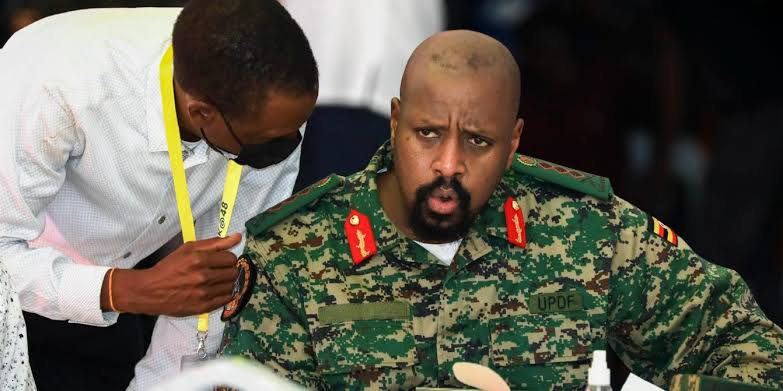
Gen. Muhoozi Kainerugaba has triggered intense nationwide debate after posting a message on his official X (formerly Twitter) account allegedly directing that all funds meant for road construction in Kampala be handed over to his office within one week.
The post, which quickly spread across social media platforms, has drawn widespread attention due to its implications on public finance management and infrastructure governance in the capital city.
In the message, Muhoozi is said to have insisted that all money allocated for Kampala road construction projects be submitted to his office for what he described as centralized coordination.
The statement immediately sparked heated reactions online, with many users questioning how such a directive would align with Uganda’s established public financial systems.
Supporters of the post interpreted it as a strong call for efficiency, arguing that Kampala’s road network has suffered from delays, poor workmanship, and alleged mismanagement over time.
They claim that centralizing oversight could potentially accelerate project completion and improve accountability in infrastructure development.

However, critics strongly rejected the idea, warning that it could undermine legal and institutional frameworks governing public expenditure in Uganda.
Opposition voices argued that road construction funds are legally controlled by government ministries and agencies, not individual offices or personalities.
They further cautioned that such a directive, if implemented, could blur the separation between military authority and civilian governance structures.
Civil society organizations also weighed in, urging the public to treat the matter with caution while awaiting formal clarification from relevant government institutions.
Legal experts emphasized that Uganda’s budgetary system is governed by strict laws that require parliamentary approval and ministerial oversight in all public spending matters.
They noted that any attempt to redirect funds outside these established structures would require formal legal and constitutional procedures.
The post has since reignited broader debate about the role of senior military officials in public administration and infrastructure management.
Political analysts say the controversy reflects ongoing tensions between institutional governance systems and increasingly assertive political communication styles.

Some analysts argue that such statements, whether symbolic or literal, often generate confusion due to the blurred line between personal expression and official authority on social media.
At the time of reporting, no official response had been issued by the Uganda People’s Defence Forces or the Ministry of Works and Transport regarding the post.
Government communication channels have also not provided clarification on how the alleged directive aligns with existing public finance regulations.
Despite the lack of official comment, the post continues to circulate widely, fueling debate across political, legal, and civil society circles.
Observers note that such viral statements often shape public discourse rapidly before formal verification or institutional interpretation is provided.
As discussions continue, many are calling for official clarification to determine the intent, scope, and legitimacy of the message attributed to Gen Muhoozi.