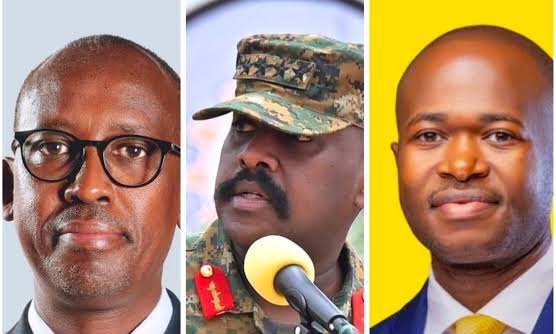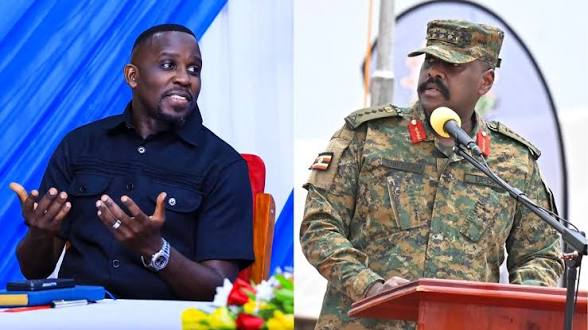
Kasambya County Member of Parliament David Kabanda has sparked fresh political debate after allegedly responding to remarks attributed to Chief of Defence Forces Gen. Muhoozi Kainerugaba concerning the removal of the Leader of Opposition in Parliament.
The comments circulating online suggest Kabanda was reacting to a directive-style statement calling for the replacement of Joel Ssenyonyi.
According to the widely shared message, Kabanda reportedly responded with confidence, saying that the process of removing Ssenyonyi could be completed within a short period.
The statement attributed to him includes the phrase “Count it done sir. Two weeks are enough to do away with him,” which quickly triggered political discussion online.
The remarks have not been independently verified by parliamentary records or official statements from the individuals mentioned.
However, they have already circulated widely across social media platforms, drawing strong reactions from both supporters and critics.

The alleged exchange has intensified debate about the role of political influence in parliamentary leadership positions.
Supporters of Kabanda and the Patriotic League of Uganda (PLU) interpret the comments as political confidence and organizational strength.
They argue that political groups routinely make strategic statements during periods of heightened competition.
Opposition supporters, however, have expressed concern over what they describe as attempts to interfere with parliamentary leadership structures.
They insist that the position of Leader of Opposition is determined by parliamentary rules and the composition of opposition parties, not external influence.
Political analysts say the controversy reflects growing tensions between emerging political movements and established opposition leadership in Uganda.
They note that public political statements often escalate quickly when they involve senior figures and parliamentary roles.
Legal experts emphasize that any changes to parliamentary leadership must follow established procedures within the Rules of Procedure of Parliament.
They add that informal declarations or political promises cannot replace formal parliamentary processes.
Civil society actors have also weighed in, urging restraint in political communication and cautioning against statements that may undermine institutional independence.

They argue that Parliament must remain a neutral institution guided by law rather than political pressure.
The debate has also highlighted the increasing prominence of the Patriotic League of Uganda in national political discourse.
Observers say the group’s statements and actions are being closely watched as Uganda approaches future electoral cycles.
At the time of publication, there has been no official confirmation or response from Parliament regarding the alleged claims.
Joel Ssenyonyi has not issued a detailed response to the circulating remarks.
The controversy continues to fuel public discussion about political competition, institutional independence, and the boundaries of public political communication in Uganda.