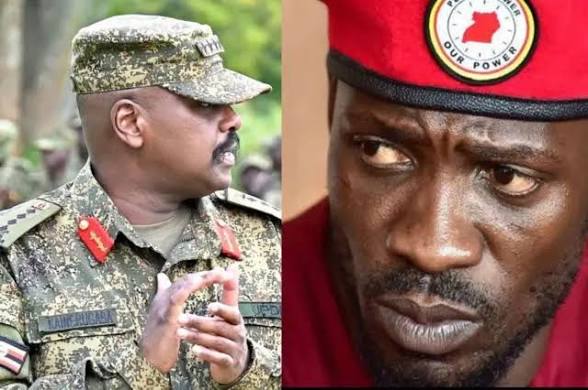
Gen. Muhoozi Kainerugaba has once again ignited a major political debate after making controversial remarks about opposition leader Robert Kyagulanyi, comments that quickly spread across social media and attracted widespread public attention.
In a statement posted online, Muhoozi appeared to issue conditions regarding Bobi Wine’s return to Uganda, remarks that immediately sparked discussion among political supporters, critics, and observers both inside and outside the country.
The comments quickly became one of the most talked-about political topics of the day, with many Ugandans expressing differing views about their meaning and implications.
As one of Uganda’s most influential political figures, Bobi Wine remains at the center of national political discussions. His movements, statements, and activities often attract significant public and media attention.
Because of his position as president of the National Unity Platform, any remarks directed toward him by senior government or military officials tend to generate widespread interest.
Muhoozi’s statement was widely shared across social media platforms, where supporters and critics immediately began debating its significance.

Some opposition supporters described the comments as deeply troubling, arguing that political competition should be conducted through democratic engagement rather than confrontational rhetoric.
Others questioned why the return of an opposition leader would become the subject of such strong public statements in the first place.
Several political commentators noted that Uganda has witnessed increasing political exchanges on social media, where influential figures often communicate directly with the public without relying on traditional media channels.
According to analysts, this trend has transformed the country’s political landscape by making online platforms a primary arena for political debate and messaging.
Supporters of Bobi Wine argued that every Ugandan citizen enjoys constitutional rights, including freedom of movement and the ability to return to their country without unnecessary restrictions.
Many of them took to social media to express solidarity with the opposition leader while calling for calm and respect for democratic principles.
On the other hand, some supporters of Muhoozi defended his right to express political opinions, though interpretations of the statement varied significantly among different audiences.
The latest controversy comes against the backdrop of an already tense political environment characterized by frequent disagreements between government-aligned figures and opposition leaders.
Over the years, Bobi Wine has emerged as one of the most prominent critics of the government, often speaking out on issues of governance, accountability, human rights, and democracy.

His political activities have earned him a large following, particularly among younger Ugandans who view him as a symbol of political change.
At the same time, his relationship with state institutions has frequently been marked by disagreements, arrests, legal battles, and political confrontations that have attracted both local and international attention.
Political analysts say statements involving high-profile leaders often resonate widely because they reflect broader national conversations about power, leadership, and the future direction of the country.
Some observers have urged restraint from all political actors, warning that inflammatory language can increase tensions and further polarize public debate.
Others argue that Uganda’s leaders, regardless of political affiliation, should focus on promoting constructive dialogue and peaceful competition within the country’s democratic framework.
As reactions continue to pour in, Muhoozi’s remarks have once again placed Uganda’s political climate under the spotlight, ensuring that discussions about political freedoms, leadership, and the relationship between government and opposition remain firmly at the center of national attention.