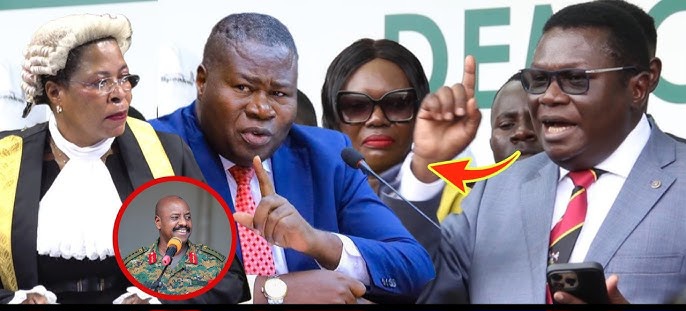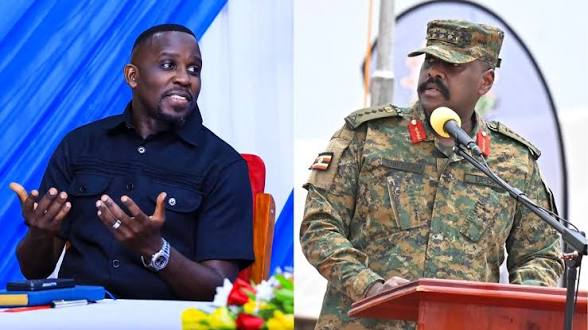
A fresh political confrontation has erupted in Uganda after Leader of the Opposition in Parliament, Joel Ssenyonyi, launched a strong attack against Chief of Defence Forces Gen. Muhoozi Kainerugaba over a series of controversial remarks that have recently sparked nationwide debate.
Speaking to journalists, Ssenyonyi accused Muhoozi of promoting what he described as lawlessness, intimidation, and a dangerous disregard for democratic principles. The opposition leader expressed concern over statements allegedly made by the military chief regarding opposition politicians and ongoing political tensions in the country.
The Nakawa West legislator said it was disturbing for a senior military officer to make public remarks that many citizens interpret as threats against political opponents. According to Ssenyonyi, such statements undermine public confidence in national institutions and create fear among citizens.
Ssenyonyi particularly criticized comments linked to the recent arrest and detention of opposition figures, including lawyer and politician Erias Lukwago. He questioned why a senior military officer would publicly discuss the detention of political leaders while appearing to celebrate their legal troubles.
The opposition leader further took issue with remarks in which Muhoozi reportedly referred to opposition figures being kept in a “basement.” According to Ssenyonyi, such comments raise serious concerns about respect for human rights and the rule of law.
In one of his strongest statements, Ssenyonyi accused Muhoozi of making comments that appeared to glorify violence. He argued that public officials should promote peace and national unity rather than rhetoric that could be interpreted as threatening.

“He said he killed 22 NUP supporters and he wants to kill others. Muhoozi, who the hell do you think you are?” Ssenyonyi asked while addressing reporters. The statement immediately attracted widespread attention across social media and political circles.
Ssenyonyi argued that no individual, regardless of rank or position, should behave as though the lives and freedoms of Ugandans are solely in their hands. He said Uganda is governed by laws and institutions that must be respected by everyone.
The opposition leader maintained that the country cannot allow a situation where powerful individuals appear to act without accountability. He insisted that leaders should be subject to the same legal standards that apply to ordinary citizens.
According to Ssenyonyi, democracy requires citizens and leaders alike to respect constitutional principles. He warned that ignoring these principles could have serious consequences for the country’s future political stability.
The legislator also criticized what he described as attempts to normalize threats against political opponents. He argued that intimidation should never become an accepted part of Uganda’s political culture.
Ssenyonyi stressed that opposition leaders would continue speaking out against actions they believe undermine democratic governance. He said silence would only encourage further abuse of authority.
“We are not going to sit back and allow everyone to shrink when this man is breaking every law in the book. That is not acceptable,” Ssenyonyi reportedly said during the press briefing.
The opposition leader also addressed Muhoozi’s social media activity, which has often generated headlines because of its political content. He argued that some of the posts have crossed the line between personal opinion and conduct expected of a senior military officer.

Particularly controversial were posts in which Muhoozi reportedly made references to religion. Ssenyonyi expressed concern about what he viewed as attempts to associate political actions with religious authority.
“You’ll see him post and say, ‘Me, I’m a descendant of Jesus Christ,’ as if to insinuate that he is committing these atrocities in the name of God,” Ssenyonyi said. “This nonsense has got to stop.”
The remarks sparked fresh discussion about the role of religion in political discourse. Many observers noted that religious references can be highly sensitive, especially when used in the context of political disagreements.
Drawing historical comparisons, Ssenyonyi warned against narratives that could be used to justify violence or abuse. He referred to past conflicts in which armed groups claimed religious justification for their actions.
He specifically mentioned the Lord’s Resistance Army, arguing that history has shown the dangers of using faith as a shield for violence or oppression. He said Uganda should learn from those painful experiences rather than risk repeating them.
As the exchange between Muhoozi and Ssenyonyi continues to dominate headlines, many Ugandans are closely watching developments. The latest confrontation highlights the deepening tensions between government-aligned figures and opposition leaders, setting the stage for what could become an even more intense political debate in the months ahead..