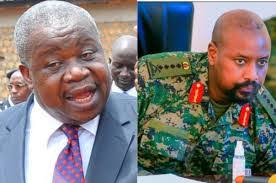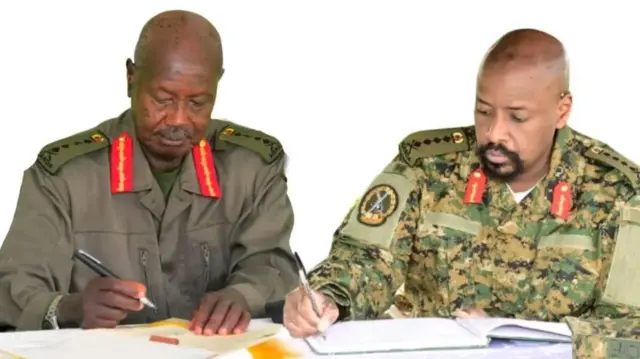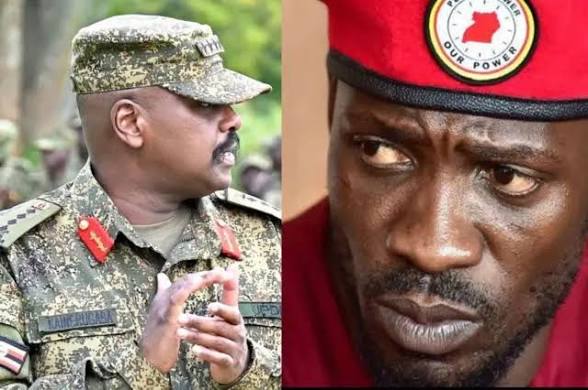
A fresh political controversy has erupted in Uganda after Chief of Defence Forces Muhoozi Kainerugaba made a series of statements regarding his authority as head of the military and the detention of opposition politician Erias Lukwago.
The comments, which were shared on social media platform X, quickly attracted widespread attention and triggered heated debate among politicians, legal experts, human rights activists, and ordinary citizens.
In one of the posts, Muhoozi declared that as Chief of Defence Forces, he has the authority to arrest opposition politicians. The statement immediately became one of the most discussed political topics in Uganda.
Muhoozi specifically referenced Erias Lukwago, the former Kampala Lord Mayor and President of the People’s Front for Freedom (PFF), who is currently on remand following his recent arrest and court appearance.
According to Muhoozi, Lukwago had sought his attention for many years and now had it. He further suggested that the opposition leader would remain in prison, remarks that sparked both concern and criticism from various quarters.
The military chief also defended what he described as his authority to arrest individuals, especially members of the opposition. His comments generated intense reactions because they touched on sensitive questions regarding the relationship between military power, law enforcement, and political activity.

Supporters of Muhoozi argued that his statements should be viewed within the context of national security and the responsibility of state institutions to enforce the law.
They maintain that no political figure should be exempt from investigation or prosecution if there is evidence suggesting involvement in criminal activity.
However, critics strongly disagreed with the remarks, arguing that arrests should be conducted strictly according to the law and under the supervision of institutions legally mandated to carry out such functions.
Human rights advocates expressed concern that statements suggesting broad powers to arrest political opponents could create fear and uncertainty within the political environment.
The controversy comes shortly after Lukwago was arrested by security operatives at his residence in Wakaliga, Kampala, an operation that attracted considerable public attention.
Reports of his arrest generated concern among supporters who questioned the circumstances under which he was taken into custody before eventually appearing in court.
Lukwago was later arraigned before the Chief Magistrate’s Court at Makindye and charged with misprision of treason, an offence related to the alleged concealment of information concerning treasonous activities.
Prosecutors allege that he possessed information relating to plans to overthrow the government but failed to report it to the relevant authorities as required by law.
The opposition leader denied the allegations when he appeared before court and was subsequently remanded to prison pending further proceedings.
His legal troubles have become a major talking point within opposition circles, where many supporters believe the charges are politically motivated.

Government officials, however, insist that the matter is now before the courts and should be handled through the judicial process without political interference.
Political analysts say the latest comments by Muhoozi highlight the increasingly confrontational nature of Uganda’s political discourse, particularly on social media.
Some observers warn that strong public statements by influential leaders can heighten political tensions and deepen divisions between government supporters and opposition groups.
Others argue that such remarks reflect the growing importance of online platforms in shaping public debate and influencing political narratives across the country.
As Lukwago remains on remand awaiting further court proceedings, discussions surrounding Muhoozi’s statements continue to dominate political conversations.
Many Ugandans are now closely watching both the legal process involving Lukwago and the broader implications of the increasingly heated exchanges between senior government figures and opposition leaders.