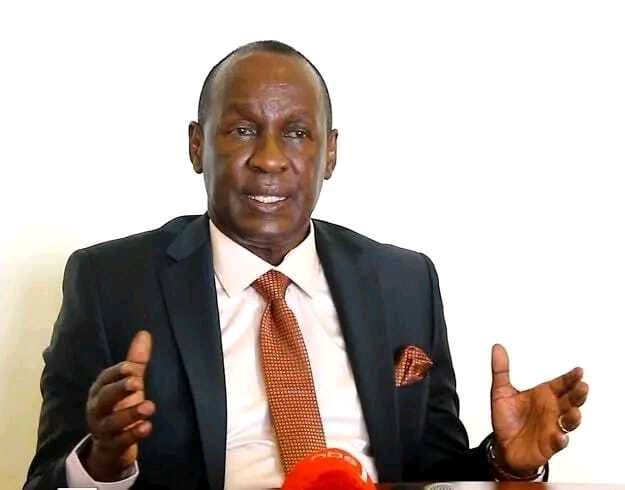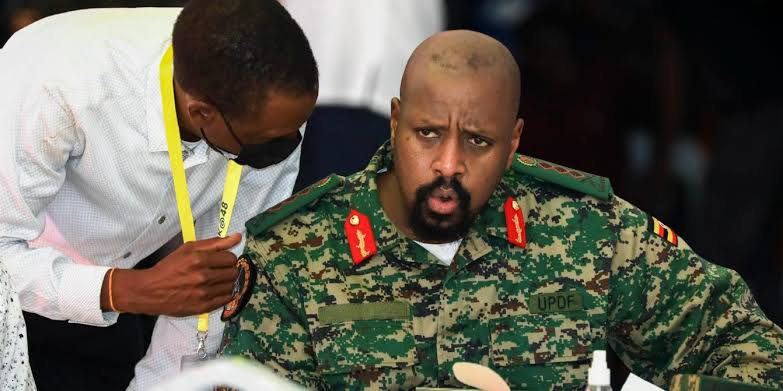
A tense political and security exchange has unfolded in Uganda, drawing national attention after senior leaders publicly traded strong words over alleged misconduct within the country’s security agencies.
The controversy gained momentum after Chief of Defence Forces Muhoozi Kainerugaba issued a warning directed at a cabinet minister, widely understood to be referring to senior government figure Kahinda Otafiire. Muhoozi’s remarks were sharp and symbolic, using powerful language that has since triggered widespread debate.
In his statement, Muhoozi said that a cabinet minister who claimed to be a “leopard” and who criticized officers of the Crime Intelligence Directorate had “provoked lions enough” and was “dangerously close to being arrested.” The statement immediately spread across social media platforms, attracting both support and criticism.
The message was interpreted by many as a direct response to earlier comments made by Otafiire regarding alleged extrajudicial killings. The tone of the exchange has raised concerns among political observers, who say such public disagreements between high-ranking leaders are unusual and potentially sensitive.
The controversy began when Kahinda Otafiire posted a strong message addressed to Hon. Prof. Ephraim Kamuntu. In his message, Otafiire warned against any tolerance of extrajudicial killings, especially those allegedly linked to officers within the Crime Intelligence Directorate of the Uganda Police.
He emphasized that no situation should justify unlawful killings and insisted that security operations must remain within the law. His comments were seen by supporters as a call for accountability and respect for human rights within security institutions.

However, his statement also triggered strong reactions from within security circles and political allies of the government. Some interpreted his remarks as a direct criticism of sensitive security operations, which are usually handled with strict confidentiality.
As the message circulated online, it quickly became a trending topic, with citizens and commentators expressing mixed reactions. Some praised Otafiire for speaking out on an issue they believe is often ignored, while others accused him of undermining national security institutions.
The situation escalated further when Muhoozi responded publicly with a statement that carried both warning and symbolic language. His use of “lions” and “leopard” metaphors added a dramatic tone to the already heated exchange.
Observers say the language used by both sides reflects deeper tensions within Uganda’s political and security environment, especially when it comes to how public criticism of security agencies is handled.
Some analysts argue that Otafiire’s remarks highlight ongoing concerns about accountability and alleged abuses by certain officers. They believe such issues, if true, require serious investigation rather than public confrontation.
Others, however, say Muhoozi’s response reflects an attempt to defend institutional discipline and discourage public criticism that could weaken confidence in security agencies.
The debate has since spread beyond political circles, with ordinary citizens engaging in discussions across social media platforms. Many are questioning whether such disagreements should be made public or handled internally.
Legal experts and political commentators have also weighed in, warning that public exchanges of this nature between senior officials could create uncertainty within governance structures.

They argue that while freedom of expression is important, matters involving national security require careful communication to avoid misunderstandings or unnecessary tension.
At the same time, human rights advocates have revisited the issue of extrajudicial killings, insisting that allegations of unlawful actions by any security personnel must be independently investigated.
They stress that accountability should remain central, regardless of rank or institution, to maintain public trust in the justice system.
As the situation continues to develop, many Ugandans are calling for calm and restraint from all sides. They urge leaders to resolve disagreements through formal channels rather than public exchanges that may inflame tensions.
The incident has once again highlighted the growing influence of social media in shaping political discourse, where statements from powerful figures can quickly reach the public and spark national debate.
For now, the exchange between Muhoozi and Otafiire remains a focal point of public attention, with many waiting to see whether the matter will escalate further or be resolved behind closed doors.