President Yoweri Kaguta Museveni has called on both ruling National Resistance Movement (NRM) leaders and opposition politicians to strengthen oversight of government programmes and ensure improved service delivery, warning that leaders who fail in their supervisory roles should be held accountable.
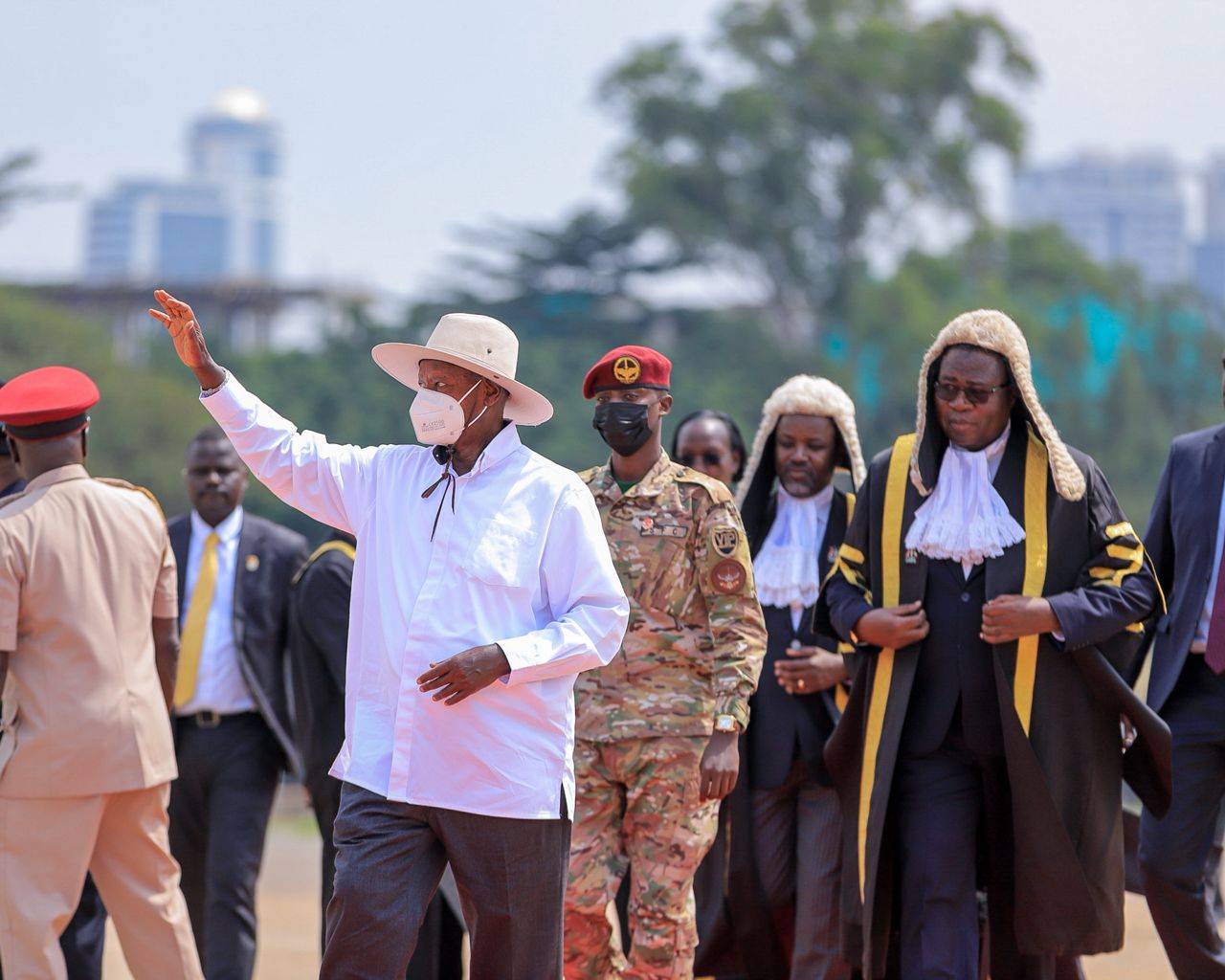
He made the remarks today during the presentation of Uganda’s Shs84.4 trillion national budget for the Financial Year 2026/27 at Kololo Ceremonial Grounds. The budget was read by the Minister of Finance, Planning and Economic Development, Henry Musasizi on behalf of the President. It prioritises economic growth, better service delivery, and support to productive sectors as Uganda advances its goal of becoming a middle-income, high-growth economy.
Museveni said Uganda has registered notable economic progress but emphasized that weak supervision and poor implementation continue to undermine government programmes. He insisted that all political leaders, regardless of party affiliation, must actively monitor projects in their areas.
“We are to demand performance from both the NRM and also the opposition. As long as you are getting money from the government, you must check what is happening on the ground,” he said.
He cited ongoing complaints about alleged theft of funds under the Parish Development Model (PDM), which he said he encountered during recent election campaigns in areas including Maracha, Kween, Kampala, Kawempe, and Buwambo.
“What are the Members of Parliament doing? What are local leaders doing?” he questioned.
The President warned that officials who neglect their monitoring duties, including local leaders and legislators, would face increased scrutiny. He also indicated he may seek legal guidance through the Attorney General on how to handle leaders who are paid to oversee programmes but fail to do so.
Museveni further stressed the need to transition the remaining 33 percent of Ugandans still outside the money economy into productive economic activity, describing this as a key national development priority.
He noted that in 1962, only about 9 percent of Ugandan households were in the money economy, rising to 32 percent by 2013, and currently standing at about 67 percent due to programmes such as Operation Wealth Creation and the Parish Development Model.
He directed leaders to closely supervise PDM implementation at parish level to prevent misuse of funds and ensure beneficiaries are supported to improve household incomes.
Presenting the budget, Musasizi said the government has transferred Shs4.4 trillion in revolving funds to 10,589 parishes under the Parish Development Model over the past five years. He added that about Shs11 trillion has been invested overall in wealth-creation initiatives targeting households, farmers, youth, women, and businesses.
He also reported that domestic revenue is expected to rise to Shs45.6 trillion in FY2026/27, up from Shs35.7 trillion, representing 15.9 percent of GDP. These funds will support agriculture, wealth creation programmes, and infrastructure development.
The economy is projected to grow by 10.2 percent in the next financial year, driven largely by petroleum production and continued investment in key sectors.
Museveni said Uganda’s economic potential remains significant, arguing that the country has only begun to tap its natural resources. He rejected criticism of broad-based investment, saying Uganda’s diverse resource base requires multi-sector development.
He also highlighted Africa as a key market for Uganda’s goods and services, stressing that production must be matched with regional demand.
On oil revenues, Museveni expressed optimism that Uganda will earn about $1.5 billion annually once production begins. He said part of this revenue will go into a sovereign wealth fund, similar to models used in countries like Norway, while the rest will support strategic infrastructure.
He identified regional railway networks linking Uganda to neighbouring countries as a priority to reduce transport costs and improve trade competitiveness.
On enforcement, the President defended government actions to remove traders from road reserves and protect wetlands, saying roads, sidewalks, markets, and swamps must be used appropriately. He warned against continued environmental degradation.
He also reassured the public about the Ebola outbreak, stating that Uganda has recorded 19 cases, including both Ugandans and Congolese nationals. He confirmed that two deaths have occurred, while several patients have recovered and others are improving.
He added that no new cases had been reported in the last five days and urged continued vigilance, hygiene, and reduced physical contact to prevent spread.
Museveni said Uganda and the Democratic Republic of Congo are coordinating efforts to strengthen screening and treatment systems near border areas to control cross-border transmission.