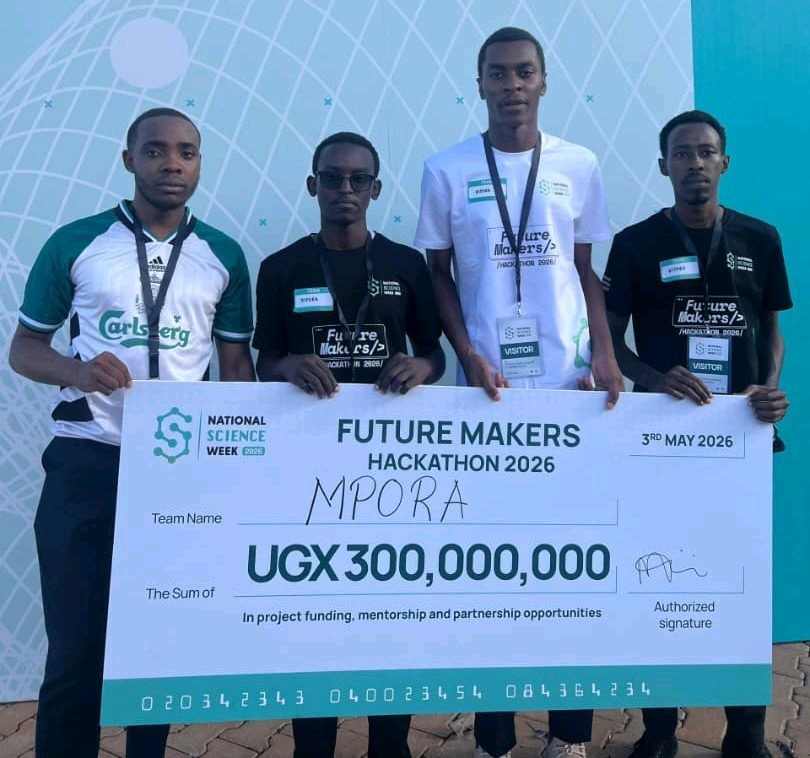
In an exciting display of creativity and ingenuity, teams from Mbarara University of Science and Technology (MUST) emerged as the top performers at the 2026 STI Future Makers Hackathon. The event, part of National Science Week, took place at Kololo Independence Grounds on May 3, 2026, and attracted innovative minds from across Uganda. MUST not only captured the top two positions but also earned a significant reward, with both teams receiving UGX 300 million each to further develop their groundbreaking solutions.
The competition was intense, with student innovators from all over Uganda vying to solve pressing national challenges through technology. Despite the fierce competition, two teams from MUST clinched the top spots, showcasing their exceptional talent and problem-solving abilities. The innovations, developed in just one week during the hackathon, reflect a new era of creativity and practicality in tackling societal issues.
The winning team, Zuula Care, introduced ZuulaCare GastroDx™️, an innovative diagnostic solution designed to detect two major bacterial infections—Helicobacter pylori and Salmonella Typhi—using a single stool sample. The simplicity and speed of the solution were key advantages, with results available in just 15 minutes, making it ideal for areas with limited access to advanced diagnostic infrastructure. The team’s dedication to creating accessible healthcare solutions was evident in their ability to develop such a sophisticated product in just seven days.
The team, led by Musau Immanuel Afrika and supported by fellow graduate students and alumni, benefited from expert mentorship throughout the process. Abel Walekhwa, a mentor from STI, and academic guidance from Prof. Joel Bazira of MUST played pivotal roles in shaping the project. The Zuula Care solution promises to revolutionize healthcare diagnostics, offering a much-needed alternative in resource-constrained environments.
Meanwhile, the second-place team, Mpora, developed an intelligent speed limit assistant aimed at improving road safety across Uganda. The device uses GPS and geofencing technology to regulate vehicle speed automatically within designated zones, a significant step towards reducing road traffic accidents caused by human error. This innovation, also crafted in just one week, targets a major issue affecting road users nationwide.
The Mpora team, composed of graduate students and alumni, has created a solution that could dramatically change how speed limits are enforced on Ugandan roads. By addressing the root causes of accidents and integrating technology into the enforcement process, Mpora’s device promises to make roads safer and reduce the number of fatalities caused by speeding.
Both Zuula Care and Mpora were developed in a high-pressure environment, with just a week to turn ideas into fully functional prototypes. Despite the time constraints, the teams demonstrated remarkable resilience and innovation. Their solutions not only highlight the potential of Ugandan students but also underscore the importance of supporting such initiatives in the country’s pursuit of technological advancement.
The financial awards granted to these two teams will allow them to continue refining their innovations and explore ways to scale their solutions. These prizes are a recognition of the talent and hard work that went into creating solutions capable of addressing critical challenges in healthcare and transport. As Uganda continues to invest in science and technology, the results of this hackathon signal a bright future for student-led innovation.
The STI Future Makers Hackathon has once again proven to be a platform for discovering exceptional student talent. With projects like ZuulaCare GastroDx™️ and Mpora’s intelligent speed limit assistant, it is clear that the next generation of Ugandan innovators is ready to make a lasting impact on the country’s future.