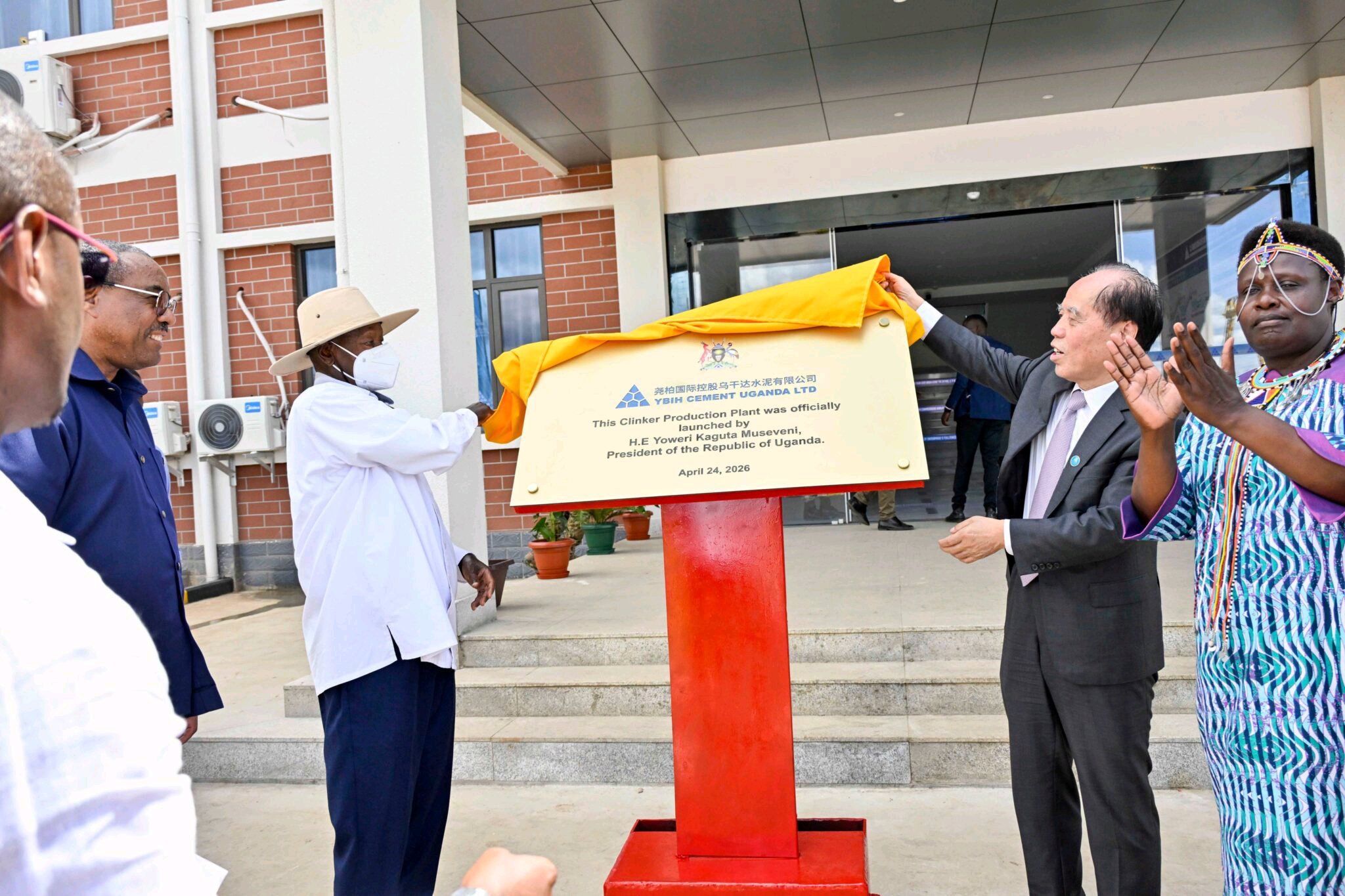
The commissioning of a massive cement factory in Moroto has marked a turning point for Uganda’s industrial ambitions, signaling a bold shift toward self-reliance and regional economic influence.
Spearheaded by Yoweri Kaguta Museveni, the launch of the $300 million Yaobai Clinker Cement Factory stands as one of the most significant investments in the country’s manufacturing sector in recent years.
Located in the historically underserved Karamoja sub-region, the plant is expected to reshape the local economy by introducing large-scale industrial activity where little previously existed. The project reflects a deliberate effort by Uganda to reduce reliance on imported construction materials while strengthening domestic production capacity.
During the inauguration, President Museveni praised the collaboration between Ugandan stakeholders and Chinese investors, highlighting their role in advancing the country’s industrial transformation. He underscored the importance of producing clinker locally, noting that the factory is already achieving up to 85 percent production of this critical cement component.
The President also pointed out the economic inefficiencies previously associated with importing clinker, stressing that local production would significantly cut unnecessary expenses. He further indicated his intention to review tax policies affecting manufacturers, particularly those that may hinder the growth of key industrial inputs.
Representatives from China emphasized the scale and technological advancement of the project. The facility’s first phase is capable of producing 6,000 tonnes of clinker daily, using modern, environmentally conscious systems. This not only reduces Uganda’s import bill but also positions the country to generate foreign exchange through exports.
Uganda’s Energy Minister highlighted the broader growth of the cement industry, noting a dramatic rise in national production capacity over the decades. With the addition of the Moroto plant, the country is better equipped to meet increasing demand both domestically and across neighboring markets.
Local leaders and project partners credited improved security and long-term government vision for making the investment possible. The factory is expected to produce millions of tonnes of clinker and cement annually while creating thousands of jobs, offering a substantial boost to livelihoods in the region.
Beyond its immediate economic benefits, the plant is poised to serve as a regional supply hub, exporting to countries such as South Sudan, Kenya, and the Democratic Republic of Congo. Its establishment signals not just industrial progress, but a broader transformation of Karamoja into a key player in East Africa’s construction and manufacturing landscape.